


We compared 6 best skills intelligence platforms for AI-ready workforce planning
Skills intelligence platforms are good at finding gaps. But most are less effective at helping organizations close them.
They can tell you which employees are missing which capabilities, identify the distance between your current workforce and future skills needs, and generate reports that inform workforce planning discussions.
What many don’t do is connect those insights to action. For example, triggering the right learning → tracking whether it worked → and updating the skills record when it did.
And that connection is becoming harder to ignore. This is because skills data is moving closer to the center of workforce decision-making. Organizations are using it to identify internal talent, plan future capability needs, and guide employee growth.
As AI becomes more embedded in those processes, the quality and completeness of the underlying skills data matters even more. A platform that identifies a skills gap but can’t help close it is only solving part of the problem.
We reviewed six leading skills intelligence platforms with that standard in mind. But before comparing them, let’s understand why skills data is important.
Why skills data quality matters more than volume
It’s not uncommon to see organizations having more skills data than they know what to do with. Self-reported profiles, imported competency frameworks, inferred skills from job titles, completed courses logged in the LMS—the data exists.
But with this volume, comes the uncertainty that any of it is trustworthy enough to act on.
For example, if you build an internal mobility match on a stale profile, it sends the wrong person to the wrong role. In another case, if your succession plan is built on self-reported skills, it misses the employees who are actually ready.
And if all these unvalidated data is used to train an AI agent, it produces employee recommendations nobody trusts.
To determine whether skills data is reliable, there are four dimensions you need to look at:
Inference vs. validation
Most platforms ‘infer’ skills automatically. They pull signals from job titles, learning history, and role tenure to build a report of what employees know.
But inferred skills are not validated skills. And while they’re fast and broad, they’re only useful for planning at scale.
When it comes to high-stakes decisions like promotion, redeployment, succession, ‘validation’ is more important. A confirmation from the employee, a manager, a completed assessment, or a demonstrated project outcome certifies the inferred skills.
Platforms that only infer and never validate produce data that’s plentiful but not trustworthy enough for consequential decisions.
Data freshness
Skills data goes stale fast. An employee who completed a certification two years ago, changed roles, and picked up three new capabilities in the process looks identical in a static skills profile to one who hasn’t developed at all.
Platforms that capture skills at a point in time and don’t continuously update them create a view of the workforce that reflects the past.
Live skills intelligence requires continuous signals to feed the skills record in real time.
Human-in-the-loop review
This is an extension of the validation we discussed earlier. A reliable skills data architecture combines AI-driven inference with structured human validation in the mix.
This can be employees confirming or correcting their own profiles, managers providing input on demonstrated capabilities, or HR teams reviewing taxonomy accuracy.
Without human governance in the loop, skills data will only reflect what the algorithm assumes.
Breadth of data sources
Relying on a single source of skills data creates blind spots. Self-assessments, for example, can be incomplete, outdated, or influenced by personal perception.
Meanwhile, platforms that aggregate across multiple inputs (learning completions, certifications, project history, job changes) produce more accurate, defensible skills.
The more sources feeding the profile, the less any single bias point can distort it.
How we narrowed it down to six skills intelligence platforms
The skills intelligence market is crowded in a way that makes shortlisting hard. More than 80 vendors, most with similar category language, feature claims, and analyst mentions.
Narrowing that down to six meant being deliberate about what we were actually evaluating.
We wanted to know whether each platform could support a complete skills-led workforce strategy. This means capturing skills data → connecting it to decisions → and proving that something changed as a result.
Eight criteria shaped that evaluation:
Trusted skills data
The value of a skills intelligence platform depends on the quality of the data behind it. We looked for platforms that combine multiple sources of evidence rather than relying solely on employee self-assessments or static profiles.
Internal mobility and opportunity matching
We assessed how effectively each platform helps organizations identify internal talent, surface career opportunities, and connect employees to roles, projects, and growth opportunities.
Workforce planning capabilities
Skills data is increasingly used to support hiring, succession planning, redeployment, and workforce transformation initiatives. We looked at how well each platform supports these strategic decisions.
Closed-loop learning
Identifying a skills gap is only useful if employees can act on it. We evaluated how each platform connects skills insights to learning, development, and capability-building activities.
Manager and employee experience
Adoption often depends on whether managers and employees can easily understand and use the platform. We considered usability, accessibility, and day-to-day practicality.
Ecosystem integrations
We reviewed how well each platform integrates with HRIS, HCM, LMS, recruiting, performance management, and workforce planning systems.
Time-to-value
Some platforms require significant setup and customization before they become useful. We considered implementation complexity, onboarding requirements, and how quickly organizations can begin seeing value.
AI readiness
As AI becomes more involved in workforce planning and talent decisions, the quality and trustworthiness of skills data becomes increasingly important. We evaluated how well each platform supports that future.
Top 6 skills intelligence platforms for trusted workforce decisions
1. 365Talents (by Docebo)
What is 365Talents (by Docebo)
365Talents is an AI-powered skills intelligence platform that identifies and validates workforce skills from work, learning activity, and manager input, then maps them to roles and business needs.
Leaders can see where skills exist, where gaps remain, and what capabilities to develop, hire, or redeploy.
Rather than treating skills, talent mobility, and learning as separate processes, 365Talents connects them through a shared skills data layer.
The same intelligence used to understand workforce capabilities can also guide career opportunities, workforce planning, and targeted development.
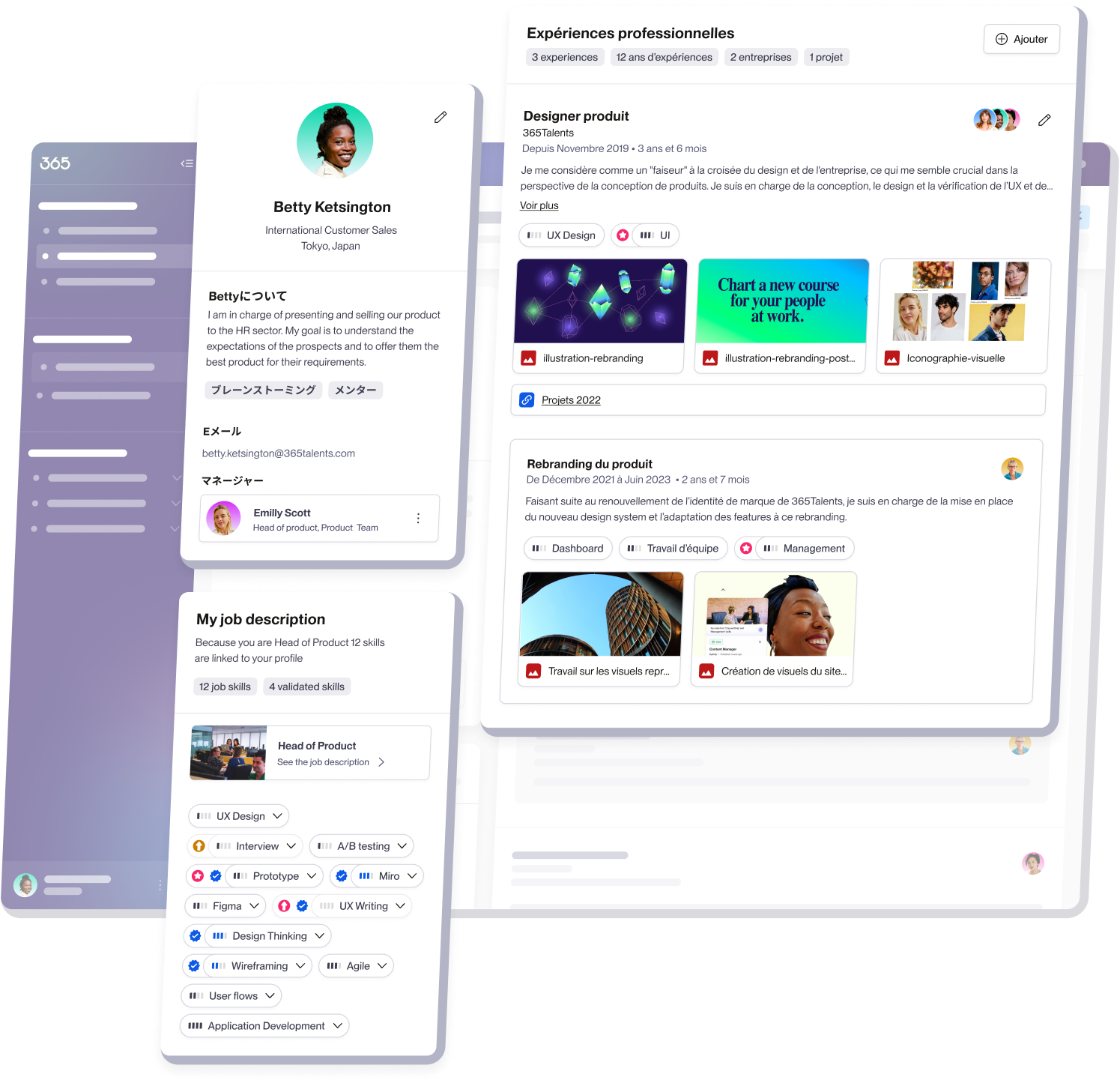
This works across three main layers.
- Skills intelligence layer: This keeps a live record of employee skills and updates it as people work, learn, and gain new experience.
- Talent layer: This uses skills data to support internal mobility, career pathing, opportunity matching, succession planning, and workforce decisions.
- Learning layer: This connects identified skill gaps to relevant learning content.
Once an employee completes learning, that signal can feed back into their skills profile, helping the company see how they’re developing.
Key features
- Skills and job architecture : Creates a consistent framework for skills, roles, and proficiency levels. AI helps teams build and update this architecture faster, with less manual work.
- AI-powered skills intelligence: Uses AI to identify, standardize, and continuously update skills from employee profiles, work history, learning, projects, and manager input. This gives organizations a live, evidence-based view of workforce capabilities.
- Internal talent marketplace: Matches employees to internal roles, projects, and gigs based on their skills. This helps organizations fill gaps internally, redeploy talent, and reduce external hiring.
- AI matching: Matches people to opportunities, roles, and gigs based on verified skills.
- Career pathing and development: Shows employees which roles match their skills and what they need to develop next. Managers can use the same data to guide career growth and mobility.
- Workforce planning and skills analytics: Provides visibility into current skills, capability gaps, workforce readiness, and future needs. Leaders can use this data to plan hiring, reskilling, and redeployment.
- HR and learning integrations: Connects with HRIS, LMS, ATS, assessment, performance, collaboration, and BI tools. This allows skills data and recommendations to flow across the systems teams already use.
What 365Talent customers are saying:
- “One of the game-changing aspects of 365 Talents is its support for internal mobility. Identifying skills for new roles or projects is now seamless, promoting continuous learning and harnessing our existing talent effectively” (Read full review)
- “The personalized learning recommendations help employees find relevant resources instantly. It removes noise from our learning catalog and supports upskilling paths.” (Read full review)
Who should consider 365Talents?
365Talents works well for large organizations that want to make better use of their existing talent. It provides the skills data needed to support employee mobility, career growth, targeted learning, reskilling, and workforce planning.
For example, a gap identified in 365Talents triggers a learning path in Docebo, the employee completes it, and the skills profile updates automatically.
Build the workforce you already have
365Talents is built for organizations looking to understand the skills they have, identify the skills they need, and close the gaps. It supports internal mobility, targeted development, workforce planning, and more informed hiring decisions.
Cheney Dent, Senior Learning Platform Specialist for Booking.com had this to say:
“Docebo is a forward-thinking company and their platform is highly customizable and that’s exactly what we desperately needed. We’ve left the chaos and apathy behind and are now trusted experts, proactively collaborating with our learning teams to create inspiring learning experiences at scale [*].”
365Talents by Docebo helps you uncover internal skills, match people to growth opportunities, and connect development to business priorities.
Discover how Docebo helps you build capability from within →
2. Gloat
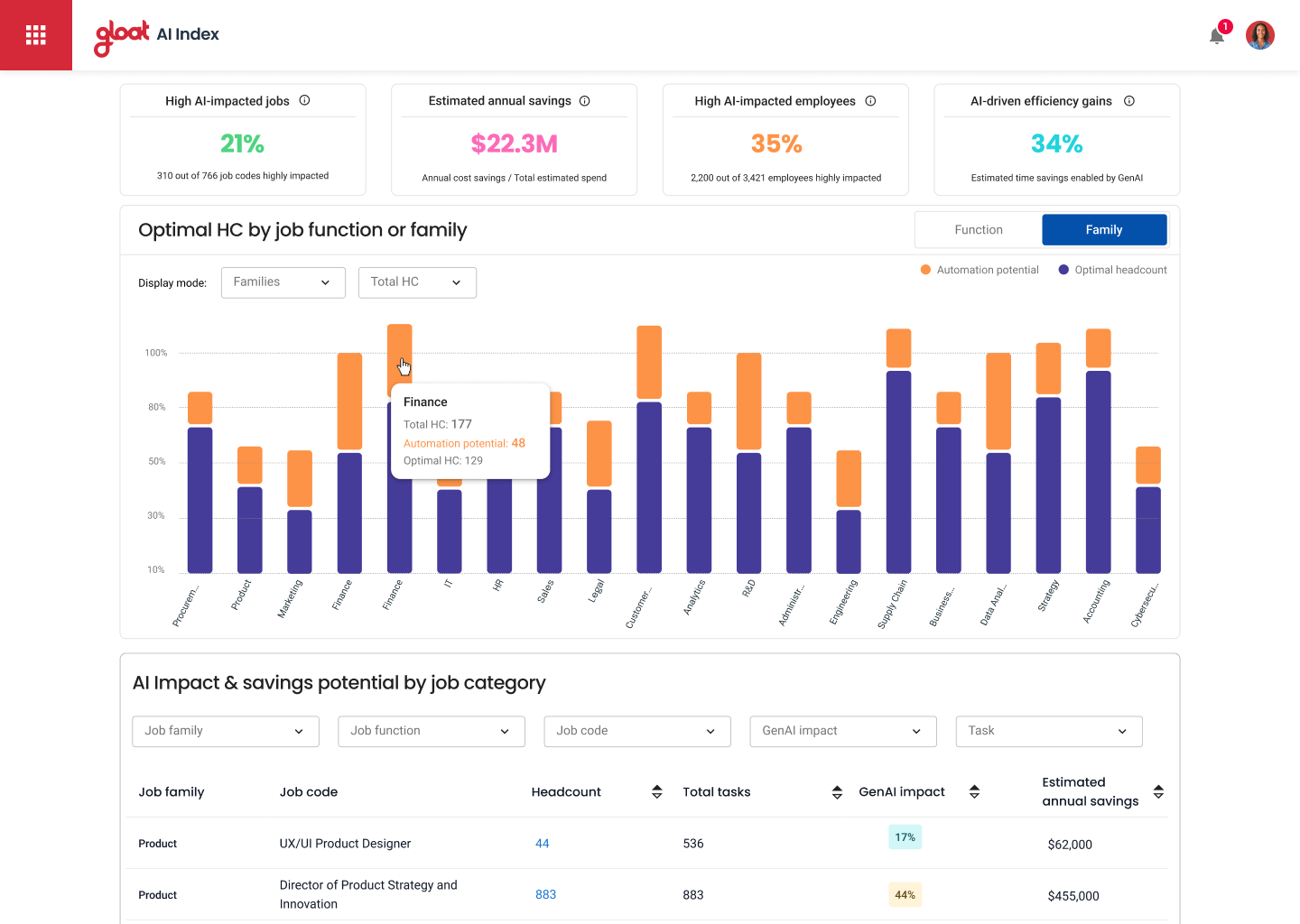
What is Gloat?
Gloat is an agentic HR platform and enterprise talent marketplace that helps companies match employees to internal roles, projects, gigs, and mentorships, based on their skills, experience, and career goals.
In a simpler way, it gives companies a clearer view of the talent they already have. Using Gloat, you get two distinct views:
- As an employer, you can see relevant opportunities across the business.
- As a manager, you can find people with the right skills faster.
This helps large organizations improve internal mobility, fill project needs, reduce hiring delays, and keep strong employees from leaving because they could not find their next opportunity internally.
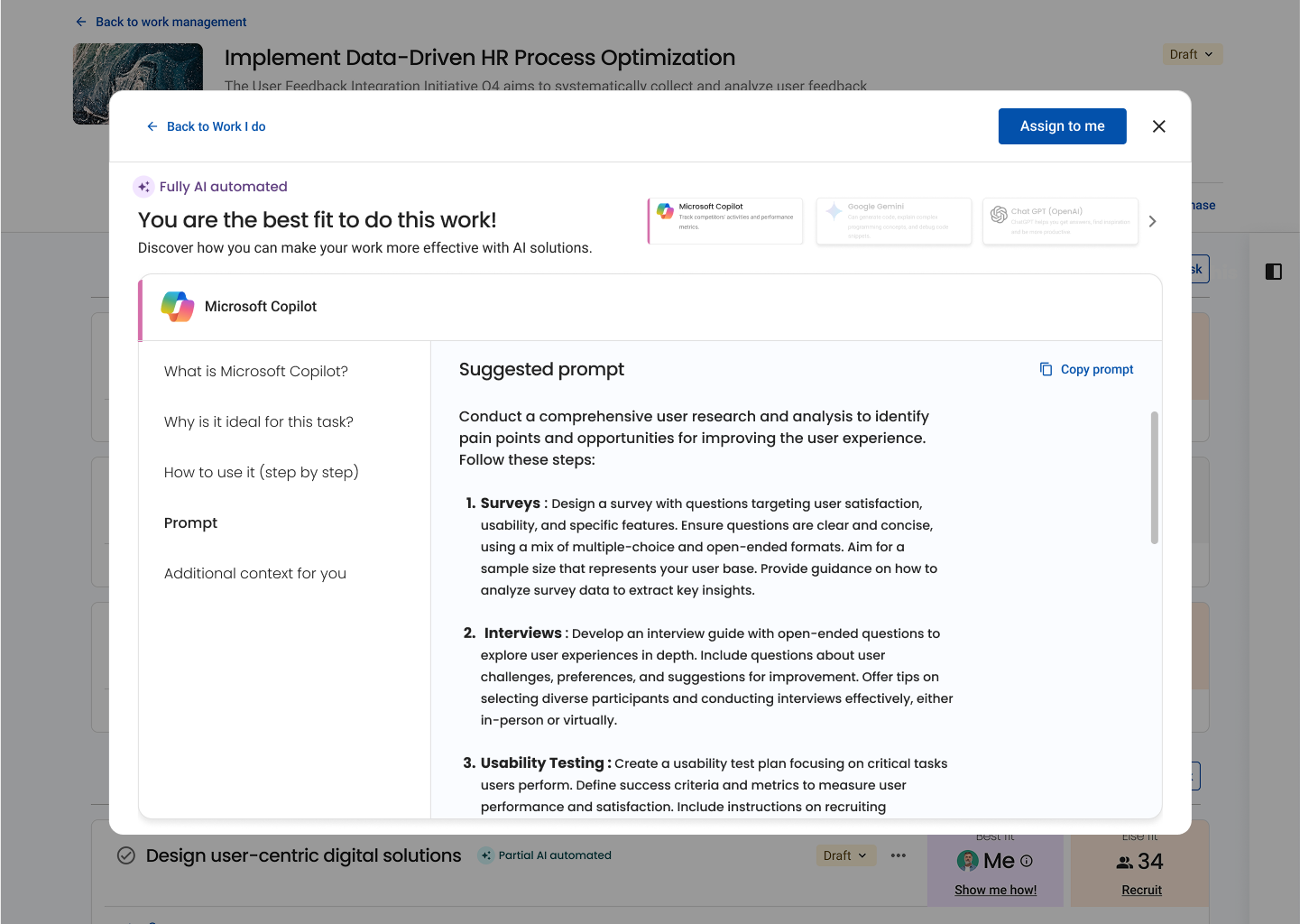
A key part of Gloat’s platform is “Loomra”, its Workforce Context Engine. Loomra connects with existing HR systems like Workday, SAP SuccessFactors, and Oracle, then uses AI to understand employee skills, career paths, roles, teams, and business needs.
Key features
- Gloat Mosaic: AI-powered work orchestration platform that breaks down high-level business goals into actionable, step-by-step workflows. It then dynamically assigns each task to the most suitable resource, whether that is a human employee based on their skills, an AI agent, or a specific productivity tool.
- AI-powered talent marketplace: Automatically matches employees to short-term gigs, cross-functional projects, full-time internal roles, and mentorships based on their career goals and skills.
- Workforce graph: Uses deep learning and multi-ontology data to map out the intricate relationships between tasks, skills, and business roles to eliminate AI-human productivity gaps.
- Gloat hiring: Extends the platform to include external talent acquisition, comparing public job board and LinkedIn profiles directly with internal candidates to ensure equitable hiring.
- Gloat skills planner: Equips HR and leadership with proactive, data-driven workforce intelligence to map future skill gaps and align talent with long-term business goals.
What Gloat customers are saying
- “Gloat has a fantastic user interface and user experience, which minimises the employee effort to log their experience, skills and development goals.” (Read full review)
- “The AI isn’t as advanced as we’d like, often left questioning the accuracy of suggestions and matching.” (Read full review).
Who should consider Gloat?
Gloat earns a spot if you’re a Fortune 500 company where the primary workforce challenge is talent mobility at scale. More specifically, matching internal supply to business demand fast enough to be useful.
However, compared to 365Talents, Gloat is more focused on talent movement and opportunity matching, without a built-in learning component to close skill gaps natively.
3. TechWolf
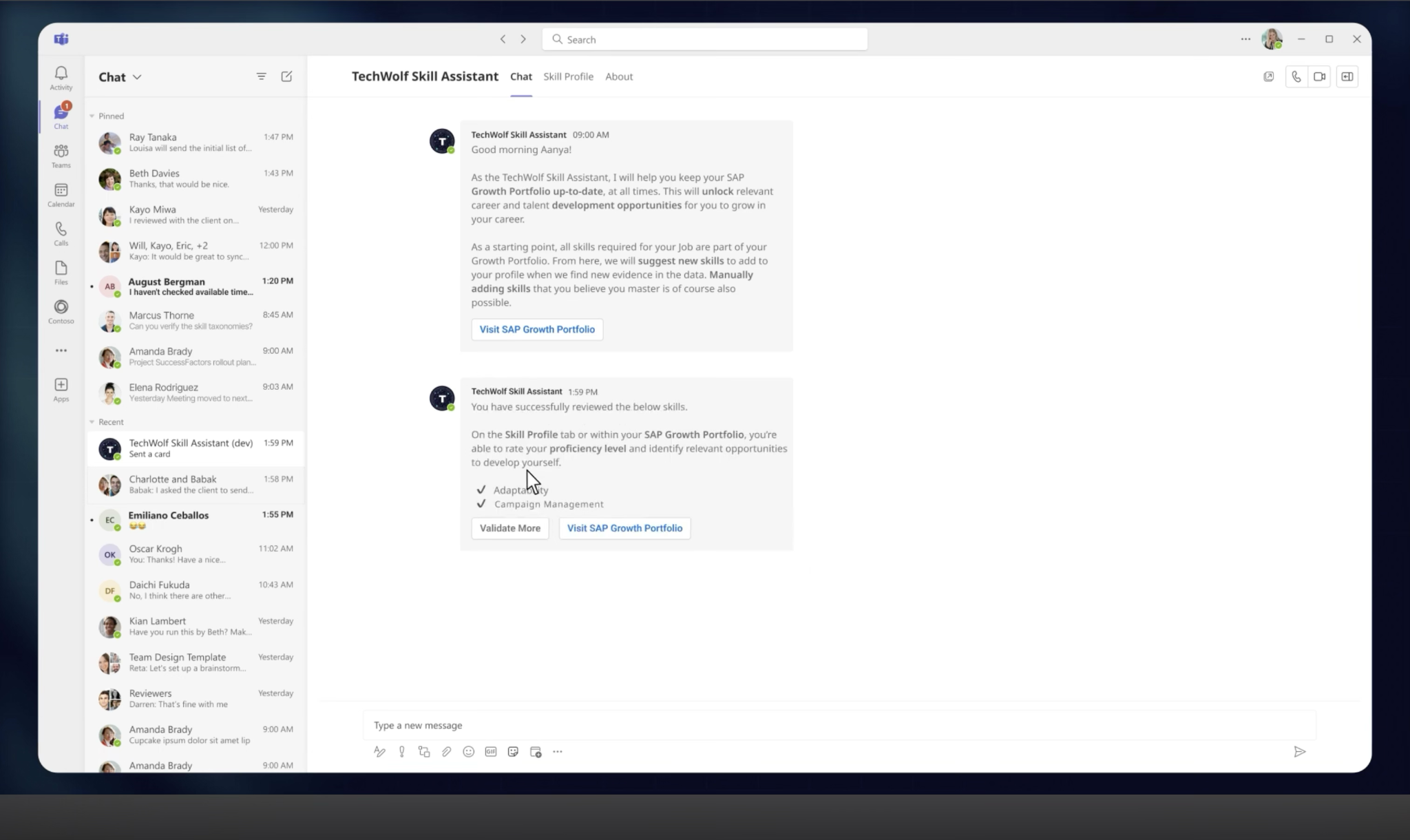
What is TechWolf?
TechWolf is a skills and work intelligence platform that helps large companies understand what their employees can do based on the work they actually perform.
Unlike some other platforms, TechWolf does not depend on employees manually updating profiles, filling out self-assessments, or logging into another HR tool.
Instead, it connects to the systems employees already use, such as Workday, SAP SuccessFactors, ServiceNow, Jira, GitHub, Salesforce, and Slack. From there, it reads work-related signals, identifies the skills behind those activities, and sends that intelligence back into the company’s existing HR systems. This gives organizations a more accurate and up-to-date view of workforce skills.
And all of these is built on two core intelligence layers: skills intelligence and workforce intelligence:
- Skills Intelligence helps companies identify the capabilities employees already have by analyzing signals across HR and business systems.
- Work intelligence looks at the work itself. It maps the tasks being performed across different roles and helps companies understand which tasks are being automated, supported by AI, or still dependent on human judgment.
Key features
- Skill supply data: Uses AI to analyze employee activities, business systems, and HR systems to create real-time skills profiles that stay updated as people work
- Skills taxonomy management: Organizations can maintain a structured and evolving skills framework that aligns with changing business priorities and workforce needs.
- Workforce intelligence index: Maps jobs, tasks, and skills data to understand AI’s impact on work.
- Data maturity scan: Helps organizations assess the quality, completeness, and readiness of their workforce data.
What TechWolf customers are saying
- “TechWolf helped us hold up a mirror to ourselves. Skills became visible. And that’s when they became valuable.”
Who should consider TechWolf?
TechWolf is a good fit for a specific type of enterprise buyer. And that’s one with a strong execution infrastructure in Workday or SAP and is specifically missing the skills data layer underneath it.
If your Workday Skills Cloud is populated with stale, self-reported data that HR doesn’t trust enough to act on, TechWolf offers enough to fix that problem.
Compared to 365Talents, though, its value is limited to the intelligence layer: it does not deliver the broader learning, career, or talent marketplace experience on its own.
4. Eightfold AI
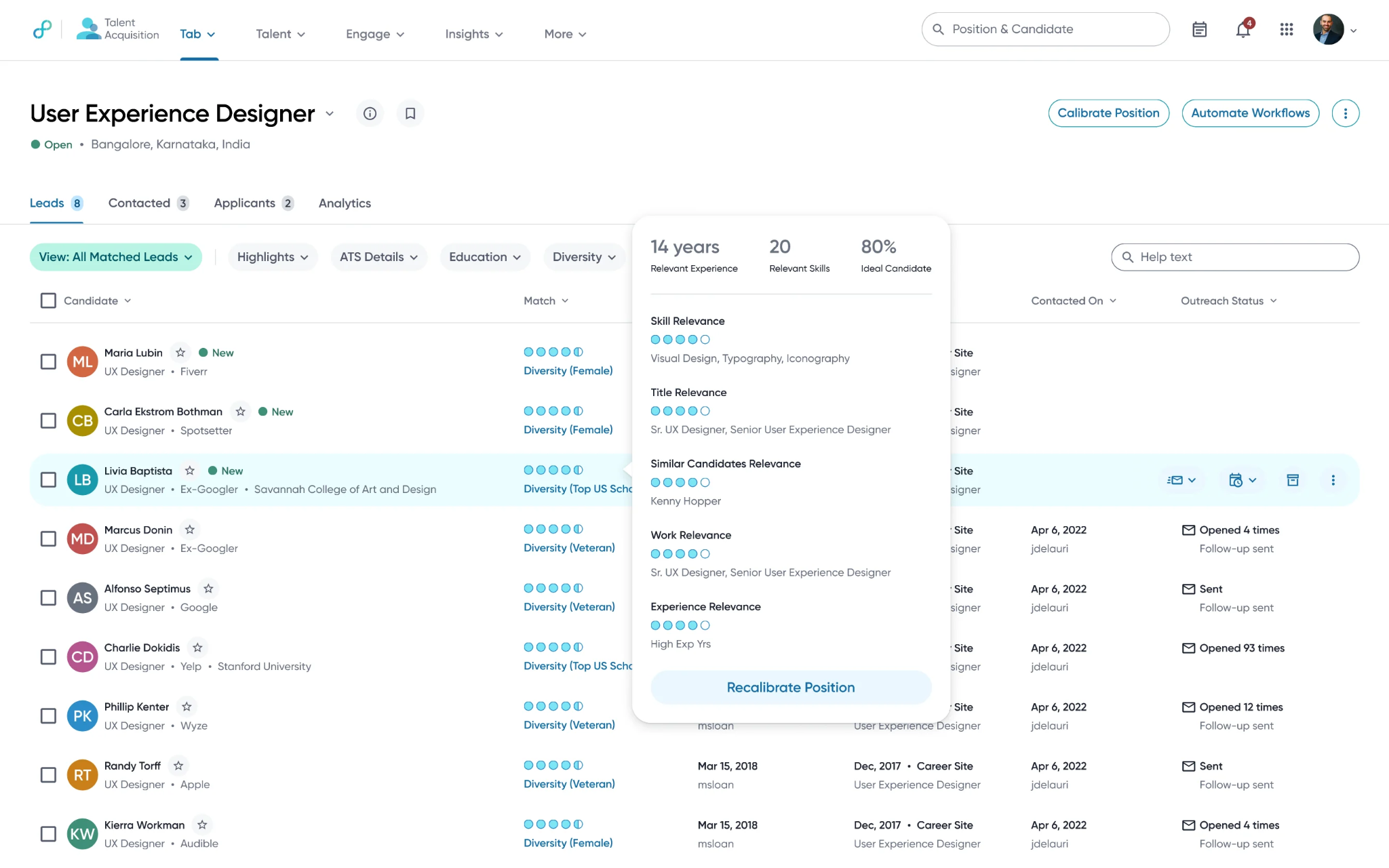
What is Eightfold AI?
Eightfold AI is an enterprise talent intelligence platform that helps companies manage hiring, internal mobility, career development, succession planning, and workforce planning in one system.
This works by using AI to understand a person’s skills, experience, career path, and potential, then matches them to the right opportunities more accurately.
Eightfold calls the technology behind this the ‘Deep Matching AI.’ It’s a model trained on a large talent dataset covering career paths and skills.
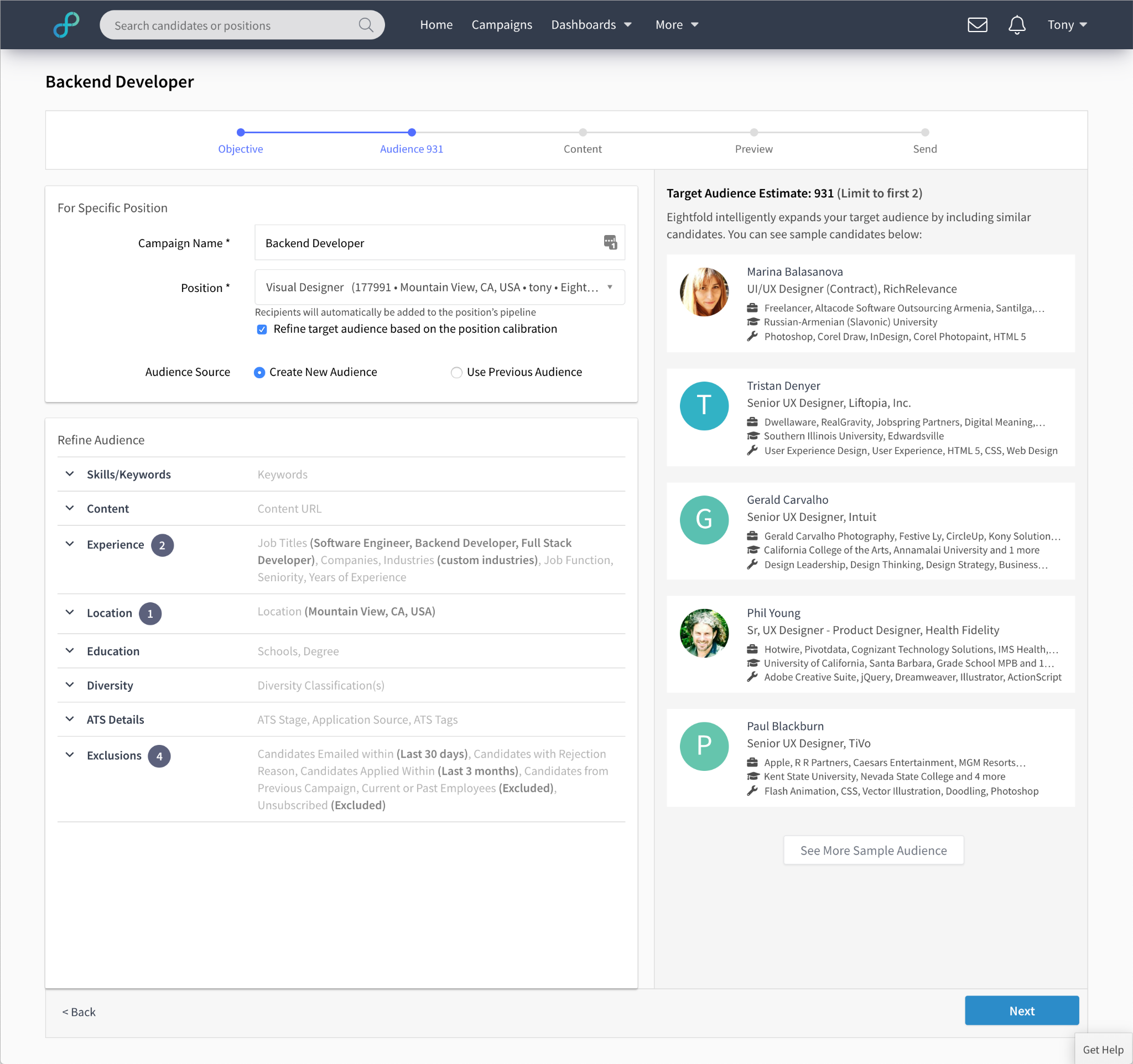
For example, where an ATS would review a resume based on the right keywords, Eightfold looks at how someone’s experience connects to a role, which skills can transfer, and what career patterns suggest they may succeed in a new position. This makes Eightfold useful for both external hiring and internal talent decisions.
Key features
- Career hub and planner: Offers employees a central place to explore growth opportunities, internal roles, learning paths, and development recommendations.
- AI interviewer (candidate-evaluation agent): Gives every candidate a structured interview experience and assess one or many candidates with consistent evaluation standards.
- Candidate relationship management: Includes CRM capabilities for building, nurturing, and rediscovering talent pools. Recruiters can use this to match past applicants, silver-medalist candidates, and passive talent to new opportunities based on evolving skill fit.
- Adjacent skills detection: Eightfold reads adjacent skills and career patterns to identify people who may have the potential to succeed in a role even if their current title or resume does not show a perfect match.
What Eightfold AI customers are saying
- “I really like the Calibration page, the Copilot for mass candidate invitations and profile summarization, and the AI Interviewer.” (Read full review)
- “The time it takes Eightfold to respond to open tickets. Also when they answer tickets, the answers aren’t always accurate.” (Read full review)
Who should consider Eightfold AI?
Eightfold is a good option for large enterprises that want one talent intelligence platform across hiring, internal mobility, career development, and workforce planning.
It can help recruiters find stronger-fit candidates, help HR teams identify internal successors, help employees see possible career paths, and help leaders plan future workforce needs through a skills-based lens.
That breadth is also the tradeoff: compared with 365Talents, Eightfold can feel more talent-suite-heavy when the main need is learning-led skills development.
5. Fuel50
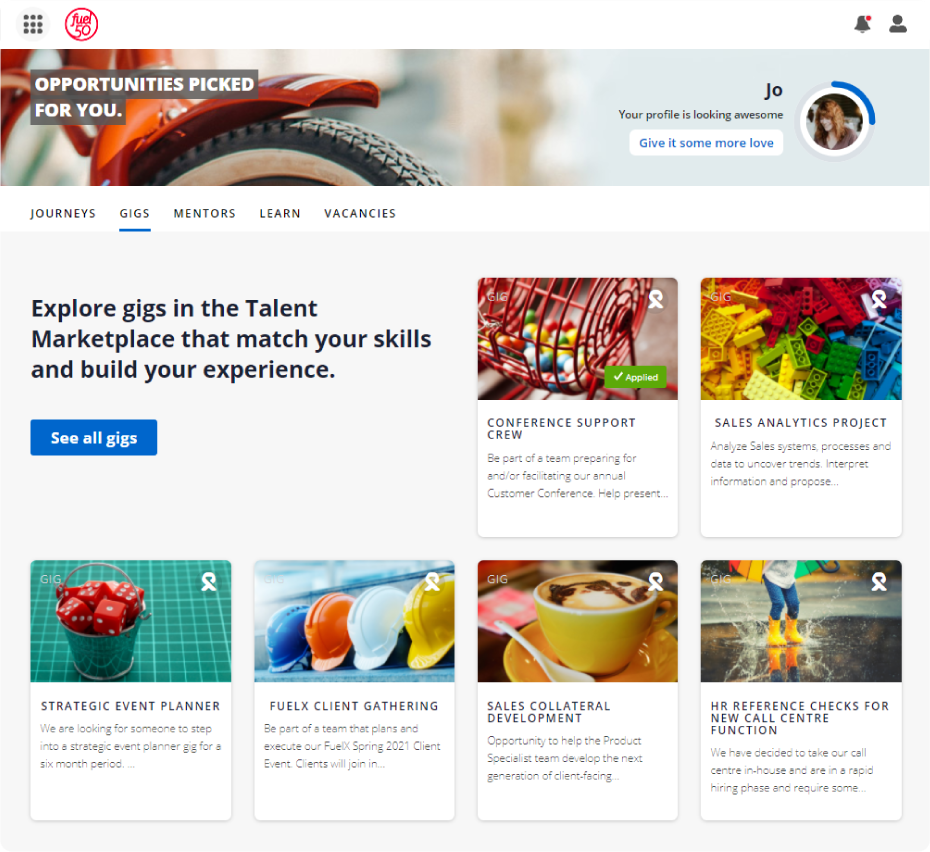
What is Fuel50?
Fuel50 is an AI-powered talent marketplace and career pathing platform that helps companies make better use of the talent they already have. It helps employees see where they can move next inside the company, what skills they need to build, and which roles, projects, or learning paths fit their goals.
Each employee gets a personalized career view based on their skills, interests, goals, and development needs. As employees use the platform, Fuel50 builds a richer profile called ‘Career DNA.’ This profile helps the platform recommend more relevant roles, projects, learning opportunities, and career paths over time.
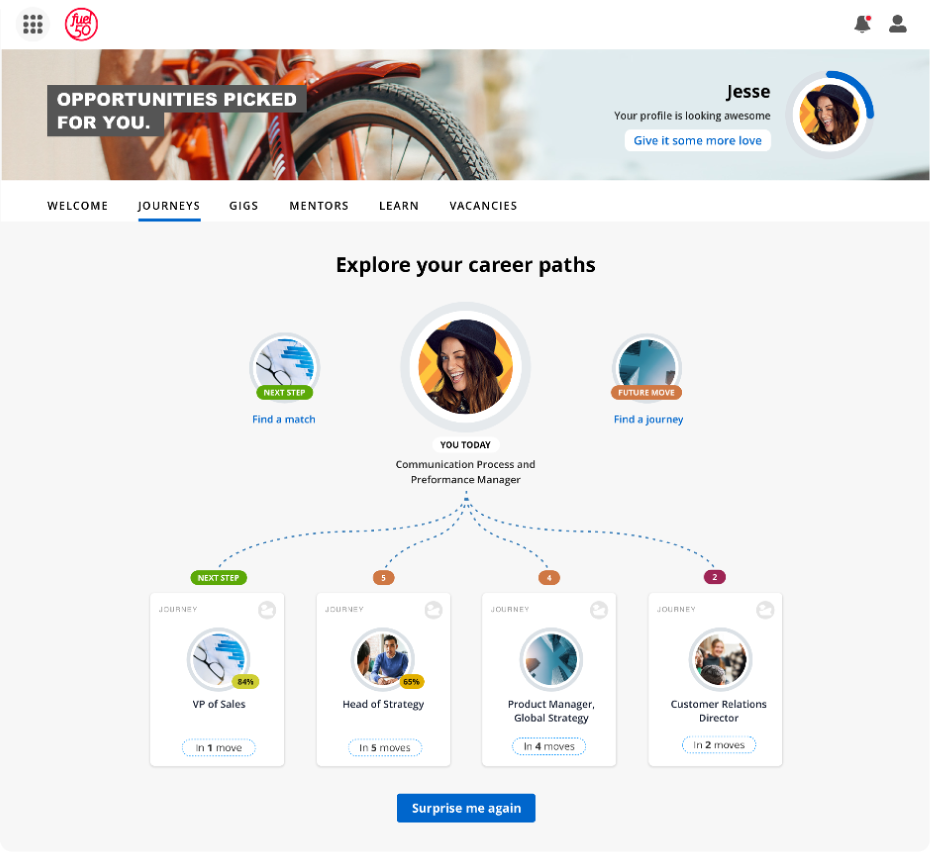
For HR and talent teams, Fuel50 turns that employee data into broader workforce insight. Leaders can see where skills gaps exist, which employees are ready for new opportunities, and where internal talent can be developed instead of hiring from outside.
Key features
- Career pathing: Employees can explore potential career journeys based on their current skills, interests, experiences, and aspirations. They can also visualize where they are today and what capabilities they need to move into future roles.
- Skills ontology: Structured skills and competency framework built with input from I/O psychologists and updated with labor market data.
- AI career agent (always-on career advisor): Employees can explore career journeys, validate their skills, see gaps, and receive recommendations (based on Fuel50’s expert-built skills models).
- Talent blueprint: Helps organizations create structured role and skills profiles that reflect business-specific needs. It gives HR a clearer foundation for mapping skills to roles, identifying gaps, and aligning employee development with workforce priorities.
What Fuel50 customers are saying
- “Fuel50 has become the only platform where staff can see their career progression options. The new Skill Inventory has been an amazing tool for updating and adding skills.” (Read full review)
- “It often feels like there are too many clicks required to get to where you want to go. The path to finding specific features or information isn’t always clear.” (Read full review).
Who should consider Fuel50?
Organizations that want to make career growth more transparent, employee-led, and skills-based should consider Fuel50.
It is especially useful if you want to improve retention by helping employees find internal roles, gigs, mentors, and learning paths before they start looking externally.
However, the tradeoff is that Fuel50 leans more toward career growth and marketplace experiences than learning execution, whereas 365Talents is more tightly connected to learning execution.
6. Degreed
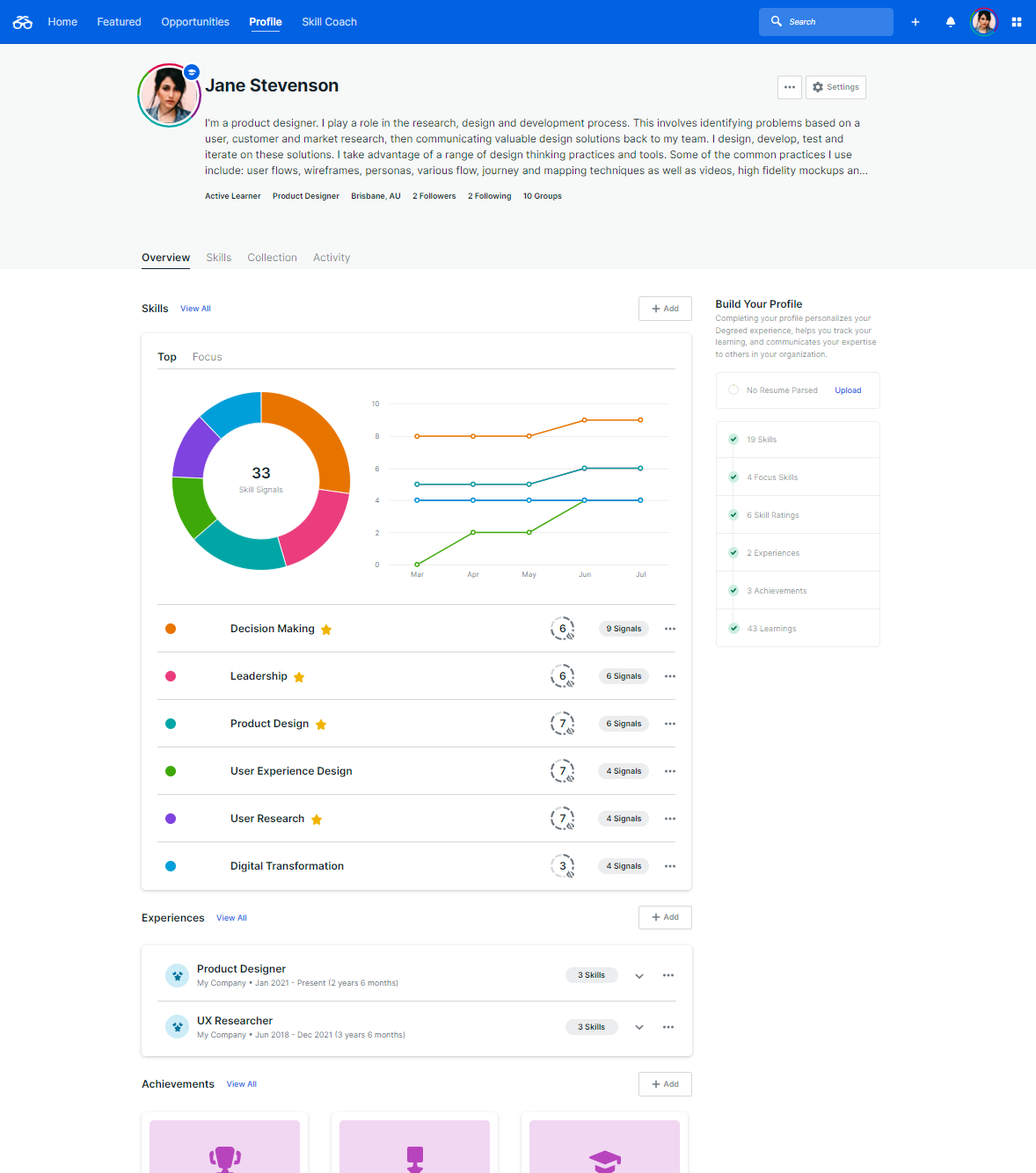
What is Degreed?
Degreed is an AI-powered upskilling and learning experience platform (LXP) that helps employees find the right learning content from many different sources in one place.
For example, Degreed connects to 1,300+ providers, with 225,000+ courses, pulling learning content from Coursera, LinkedIn Learning, internal LMS libraries, SharePoint, YouTube, company-owned resources, and other platforms. This means employees do not have to search across several systems to find useful learning.
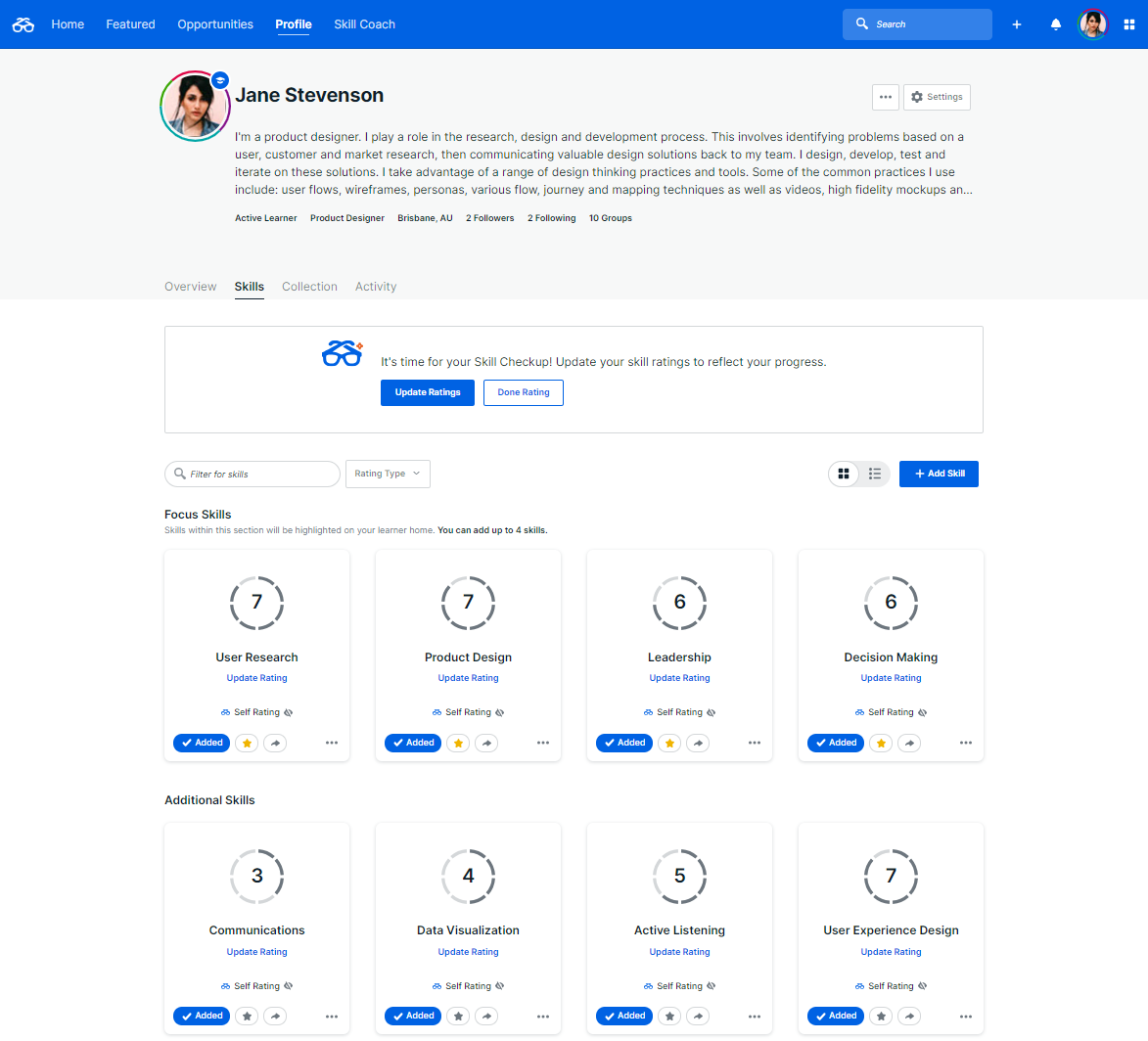
Degreed also uses skills data to make learning more relevant. It looks at each person’s role, skills, goals, and development gaps. Then it recommends learning that is more closely tied to what they need to improve or prepare for next.
Key features
- Skills profile: This is a live record of each employee’s skills, skill ratings, learning activity, and development goals.
- Maestro (AI learning coach): Uses an employee’s skill profile, role, and experience to create more personalized learning support.
- Open library: Includes 350+ AI-generated learning pathways across major industries and multiple languages, including Portuguese, Spanish, French, and German.
- Maestro studio: Organizations can create custom AI-native learning experiences, including role-plays, custom coaches, and tailored development experiences.
What Degreed customers are saying
- “I really like the catalogue of courses and trainings available, and the easy way to find them and to have your learning path in progress, Is so easy to take a look into it and also to share links and to also get badges and show the in Linkedin.” (Read full review)
- “The user experience is horrible. Information architecture is a mess: I can’t find anything, the menus don’t make any sense.” (Read full review)
Who should consider Degreed?
Degreed works well when the goal is to aggregate learning, curate pathways, build academies, personalize recommendations, measure skill growth, and give employees more ownership over development.
That makes Degreed a strong fit for development, but a less direct fit for internal mobility and workforce staffing than 365Talents, Gloat, or Fuel50.
Also worth considering: SAP SuccessFactors and Workday Skills Cloud
SAP SuccessFactors
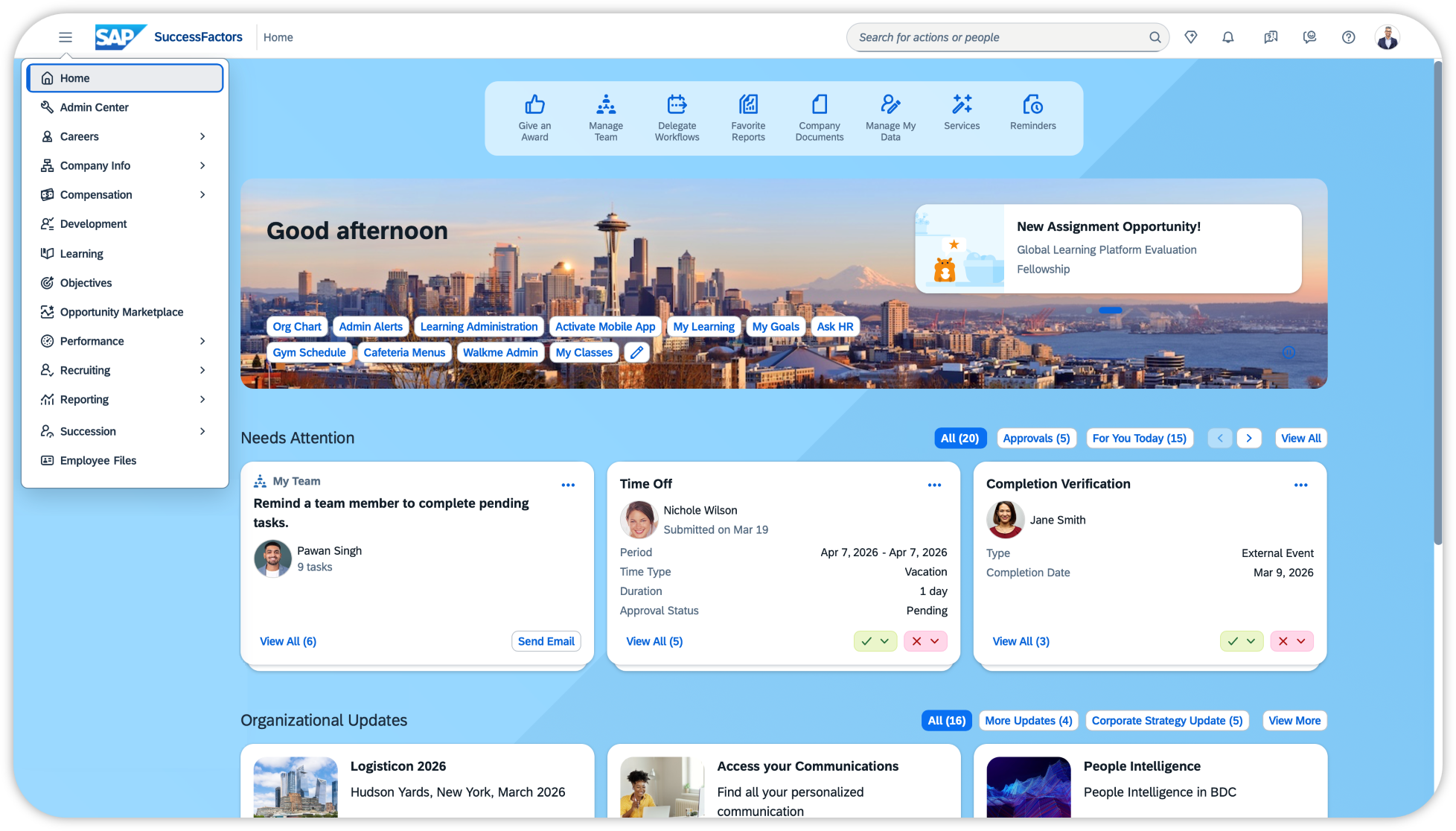
SAP SuccessFactors is not a standalone skills intelligence platform in the same way as 365Talents, TechWolf, Gloat, Fuel50, or Degreed.
It is a full HR suite that covers recruiting, onboarding, performance, learning, compensation, succession, and workforce planning.
So it’s a good option for companies already using SAP because skills data can connect directly to the rest of their HR processes. But for companies that only want a dedicated skills intelligence platform, SuccessFactors may feel too broad, too heavy, and too tied to the SAP ecosystem.
Key features:
- Talent intelligence hub: Unified employee skills, competencies, attributes, and experiences across different SuccessFactors modules.
- Attributes library: HR teams can manage skills, competencies, and behavioral attributes in one place.
- Growth portfolio: Each employee has a personalized view of their skills, development needs, and career options. It can also use AI to suggest skills an employee may already have but has not added to their profile.
Workday Skills Cloud
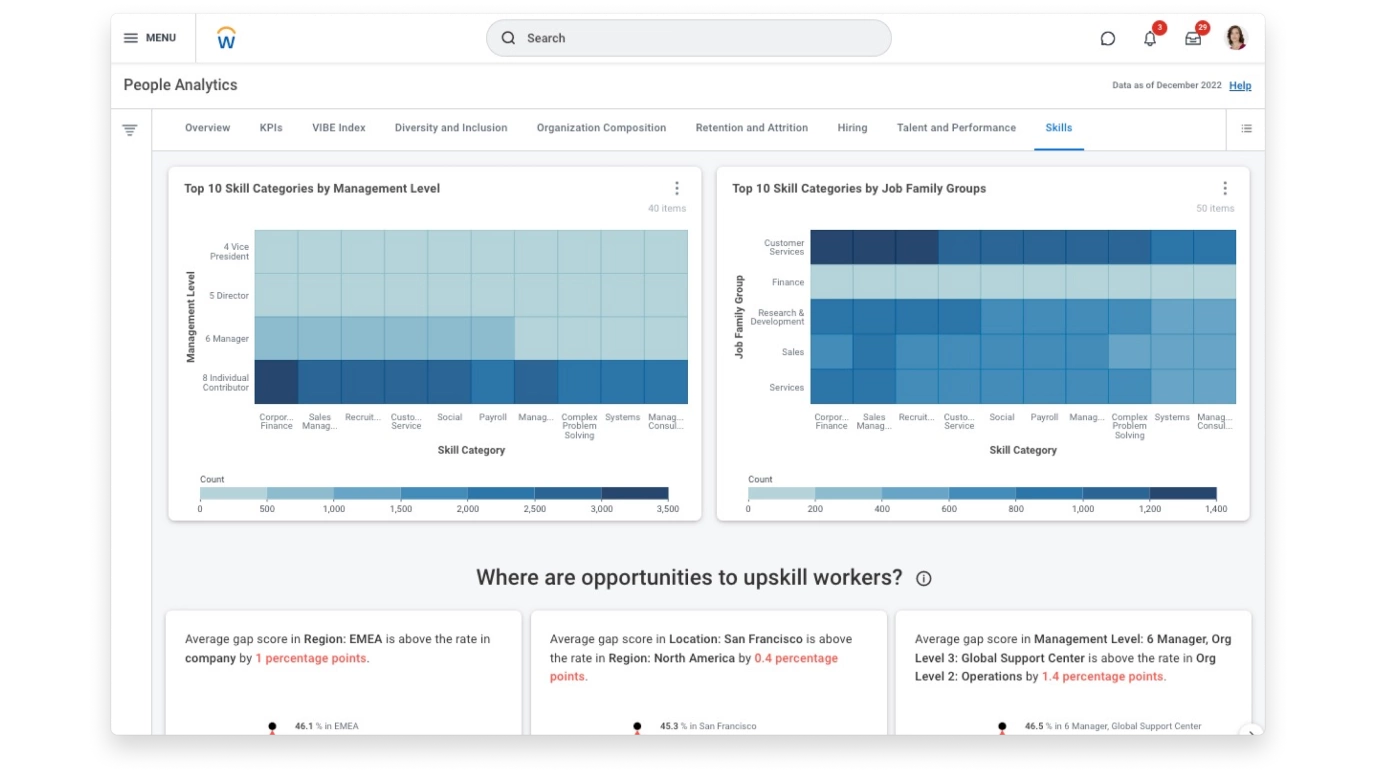
Workday Skills Cloud is Workday’s HCM-native skills intelligence layer. Similar to SAPSuccessFactors, it works best for companies already using Workday as their main HR system.
In that setup, skills data stays inside the same system where HR teams already manage talent decisions. Employees do not need to maintain a separate skills profile in another platform, and HR teams do not need to run skills intelligence outside their core HCM.
Key features:
- Career hub: Recommends internal roles, projects, and flexible work opportunities based on an employee’s current skills and career interests.
- Workday Learning: Suggests learning content tied to skill gaps.
- People analytics and prism analytics: Helps HR leaders see where skills gaps are growing and where the business may need to build or redeploy talent.
Skills intelligence that doesn’t stop at the insight
With 365Talents by Docebo, you can connect skills intelligence directly to learning, development, and workforce readiness. Identify the skills your business needs, match people to the right growth opportunities, and turn every insight into a clear development action.
And like how our friends at Zoom describe it:
“We wouldn’t exist if not for our customers. Putting ourselves in our customers’ shoes will always steer us in the right direction, and leveraging Docebo helps us make them powerful. [*]”
See how Docebo helps you turn skills data into workforce capability →
Not sure which platform to choose? Start here.
Here’s a cheatsheet to make the decision easier:
| If your problem is… | Your platform is… | Here’s why… |
| Skills gaps that get identified but never closed | 365Talents by Docebo | The only platform in this guide that connects gap identification to learning execution and updates the skills record automatically when learning is complete. |
| Trusted skills data for AI agents and workforce decisions | 365Talents by Docebo | Continuous AI inference, human-in-the-loop validation, and multi-source validated skills data that downstream AI tools and workforce decisions require. |
| Internal talent mobility at Fortune 500 scale | Gloat | Loomra powers real-time talent matching across thousands of roles. |
| Building a trusted skills data layer inside Workday or SAP without adding a new application | TechWolf | Embeds directly into existing HCM systems, infers skills from work signals, and keeps the data current without asking employees to maintain a separate profile. |
| Full talent lifecycle intelligence spanning external hiring and internal mobility | Eightfold AI | Covers talent acquisition, internal mobility, succession, and workforce planning in one platform. Also comes with an AI Interviewer for autonomous screening. |
| Employees leaving because they can’t see a future inside the organization | Fuel50 | Offers features like Career Advisor and Profiling to solve employee retention and engagement problem. |
| Connecting employees to the right learning across a fragmented content ecosystem | Degreed | 1,300+ content providers, 225,000+ courses, Maestro AI coaching, and MCP Server integration with Microsoft Copilot. |
| You’re already running SAP or Workday and want to activate the skills layer you already own | SAP SuccessFactors/Workday Skills Cloud | Both offer meaningful skills intelligence within their ecosystems. SuccessFactors’ Talent Intelligence Hub and Workday Skills Cloud are the right starting points if you’re already invested in either suite. |
“We started with 365Talents to implement it as an internal talent marketplace. And as we are doing so, it’s starting to feed us with the flow of new skills that are in the organisation.”
Vincent-Pierre Giroux, Global Learning & Talent Development Director, Alstom.
Turn Workforce Skills Data Into Learning Action
365Talents by Docebo connects skills mapping, workforce intelligence, internal mobility, career development, and learning recommendations in a way that helps organizations act on their skills data.
SNCF is one of the clearest examples of what that looks like. By deploying 365Talents across one of Europe’s largest and most complex workforces, they saved €100M on external consulting and temp staffing.
“The decision to choose 365Talents was driven by two key factors: the tool’s ability to integrate with other platforms and its flexibility, which allowed it to adapt to SNCF’s specific needs while remaining a standard solution.” (Read case study)
Those two factors—integration and flexibility—are worth keeping in mind as you evaluate any platform in this guide.
A platform that can’t connect to your existing HR stack, or that forces your organization to conform to a rigid framework rather than adapting to how you actually work, will never produce outcomes at SNCF’s scale.
365Talents by Docebo is built to do both.
See the Platform Behind SNCF’s €100M Outcome →
FAQs
What is a skills intelligence platform?
A skills intelligence platform helps organizations understand the skill sets their workforce has today, the critical skills the business will need next, and the gaps between both.
It usually combines employee profiles, learning history, skills assessment data, job histories, and workforce data analysis to give HR and L&D teams a clearer view of workforce capability.
How is a skills intelligence platform different from an LMS?
- A skills intelligence platform helps identify which specific skills employees have, which ones are missing, and what development actions should come next.
- While an LMS (learning management system) delivers and tracks learning.
Opt for platforms that can connect skills visibility with skill development, so learning is tied to business needs, career paths, and workforce readiness.
| Feature | Skills Intelligence Platform | LMS |
| Main Function | Map, infer, and validate workforce capability | Deliver and track learning |
| Primary User | CHRO, Head of Talent, and workforce planning leads | L&D team and compliance managers |
| Data Model | Skills inferred from work, learning, projects, assessments, and manager input | Course completions, certifications, and time spent |
| Skills Data | Interprets what learning means for capability | Records learning activity |
| Update Cadence | Updates continuously as people work, learn, and move | Updates when learning is assigned or completed |
| Workforce Decisions Supported | Internal mobility, succession, redeployment, and gap closure | Training compliance and learning program management |
| AI Agent Readiness | High: validated, multi-source skills data | Low: activity data only |
| Integration Direction | Triggers learning and receives completion signals back | Receives learning assignments |
| Gap Closure Tracking | Updates the skills record post-learning | Tracks completions |
Why do companies need skills intelligence?
Companies need skills intelligence because workforce needs are changing faster than traditional talent management systems can track.
Without a clear view of skills, it becomes harder to identify shortages, plan reskilling programs, improve internal mobility, or know whether employees are ready for future roles.
What features should you look for in a skills intelligence platform?
Look for skills mapping, AI-powered recommendations, workforce planning, automation, learning recommendations, internal mobility matching, and reliable skills data.
The platform should also help you forecast future skill needs, compare current capabilities against a benchmark, and identify where development investment will have the most impact.
Can skills intelligence improve workforce planning?
Yes. Skills intelligence helps leaders understand what capabilities the business actually has.
By analyzing roles, job descriptions, learning data, employee profiles, and performance signals, teams can better optimize hiring, reskilling, redeployment, and internal mobility decisions.