


Top 10 Best Hospitality LMSs for 2026
After having to sit around at home for over two years during the COVID-19 pandemic, travelers have again taken to the road in search of new experiences.
This has put increased pressure on the hospitality sector, looking to rise to the challenge and greet their guests with the utmost professionalism.
Many in the hospitality industry have turned to online employee training with the help of hospitality learning management systems (LMSs).
In this article, we’ll be taking a look at what these learning platforms are, how they benefit hospitality businesses, and what key features they need to include.
We’ll also list ten of the best hospitality LMS solutions to help you choose one that best meets your needs and requirements.
What is a Hospitality LMS?
A hospitality LMS is a software training solution that hotels, resorts, restaurants, and others in the hospitality industry can use to manage and deliver training courses to employees.
Businesses can use these e-learning solutions to onboard new employees, upskill and reskill existing ones, conduct customer support and service training, conduct marketing and sales enablement programs, undergo compliance training, and more.
These hospitality training platforms are designed to create, curate, manage, and deliver online e-learning courses, training content in various formats, quizzes, and assessments.
They also help track learner progress, gather and analyze real-time data and feedback, and generate customized LMS reports for better decision-making.
Most modern LMSs can help design personalized learning paths and offer social learning capabilities to enhance the learning experience and offer more flexible and effective training programs.
They often include gamification elements such as leaderboards, badges, and other rewards in their course creation functionalities. These aim to drive learner engagement and knowledge retention.
The majority of LMS software systems are also xAPI- (Tin Can API) and SCORM-compliant, meaning that they can deliver xAPI and SCORM files and courses to learners without any compatibility issues.
To enhance their performance, boost user experience, and automate processes, LMS software integrates with various third-party tools.
LMS integrations can be with customer management systems (CRMs), content-authoring tools, human resources platforms, social media, marketing and sales, and webinars and video conferencing systems, among many others.
All of these LMS capabilities can bring several benefits to the table for hospitality organizations using them.
Sneak preview of the best learning platforms for hospitality
| Hospitality LMS | Best for | Top Feature |
| 1. Docebo | Multi-location hospitality operations requiring automated compliance and diverse training audiences for enterprise organizations. | AI-powered course authoring that converts documents into role-ready microlearning content. |
| 2. Moodle | Organizations needing extensive customization and control over their training platform architecture. | 2,390+ open-source plugins for tailored hospitality training workflows. |
| 3. Litmos | Hospitality teams training staff across departments with pre-built content and rapid deployment needs. | Built-in content library with off-the-shelf hospitality and compliance courses. |
| 4. Cypher Learning | Properties seeking AI-driven skills gap identification and adaptive learning for diverse staff. | AI-powered learning paths with automated skills gap detection and personalized recommendations. |
| 5. 360Learning | Organizations leveraging frontline expertise to create peer-driven training content internally. | Collaborative course creation enabling experienced staff to build reusable training materials. |
| 6. Absorb LMS | Hotel chains and restaurant groups managing training across multiple brands or property portfolios. | Multi-tenant architecture for centralized management with brand-specific customization. |
| 7. TalentLMS | Multi-location hospitality businesses requiring quick setup without technical resources. | Branch-based training organization with centralized oversight and property-level content control. |
| 8. Cornerstone Learning | Enterprise hospitality brands linking learning to performance management and career development. | Integrated talent management connecting training data with performance tracking and succession planning. |
| 9. ProProfs LMS | Small to mid-sized hospitality businesses needing straightforward training without design complexity. | Pre-made course library covering hospitality topics with simple customization options. |
| 10. EducateMe LMS | Properties combining online training with hands-on assessments and competency-based tracking. | Blended learning support integrating self-paced modules with practical on-the-job evaluations. |
10 Best Hospitality LMSs in 2026 (Detailed)
When searching for the best hospitality LMS to suit your e-learning and training needs, you need to keep in mind all the LMS requirements that will help you optimize your processes.
With that in mind, let’s take a closer look at the best LMS tools for hospitality.
1. Docebo
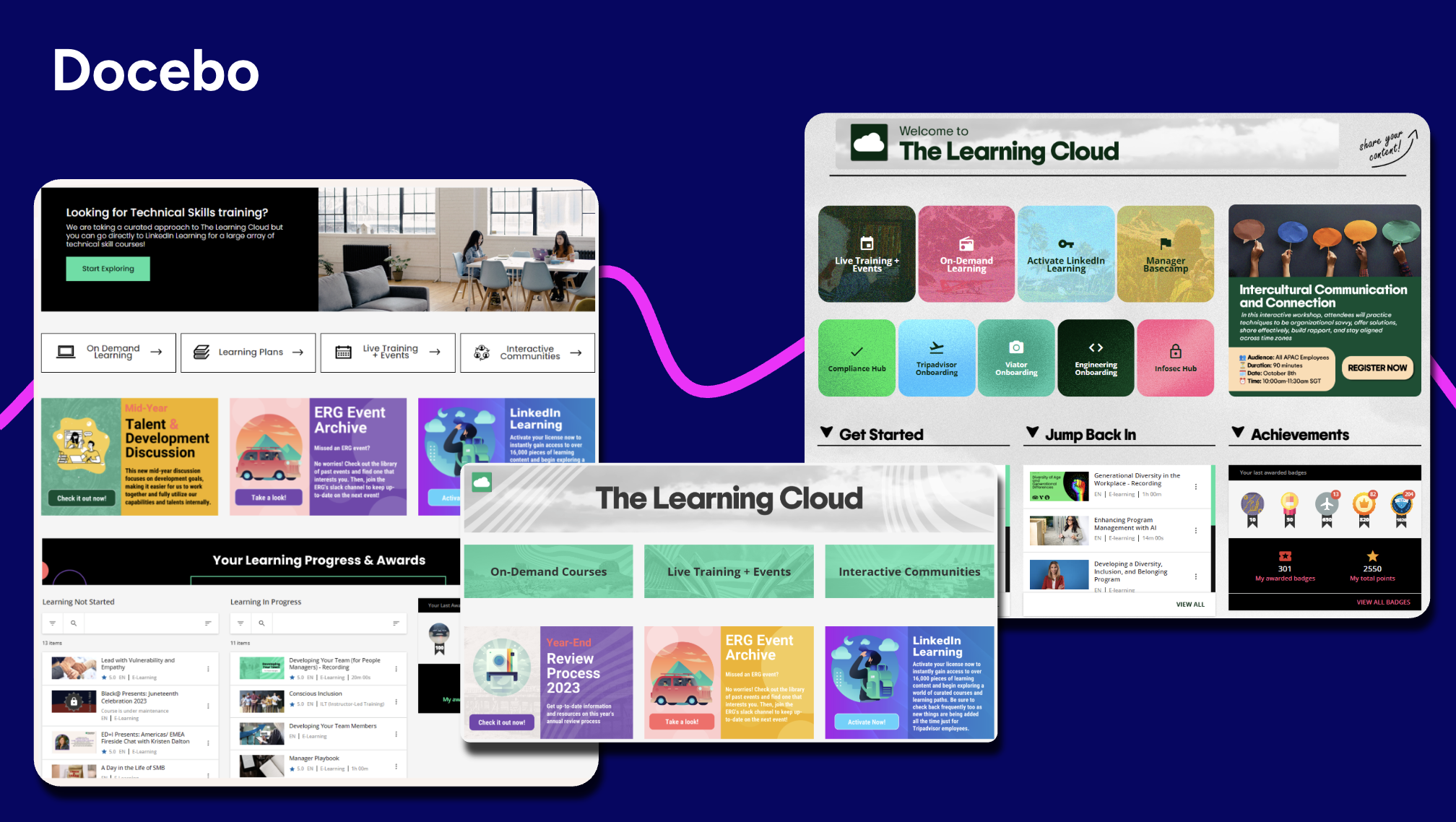
Docebo is a cloud-based LMS built for hospitality organizations managing training across multiple locations and audiences.
Its AI authoring tool converts internal documents and external sources into condensed, role-ready learning content, while a content library of over 30,000 off-the-shelf courses covers food and health safety, HACCP compliance, DEI training, and more.
Social and microlearning features enable knowledge-sharing across properties, and mobile access lets frontline staff complete training on any device, on or off shift. Automated compliance workflows cover certification, recertification, and regulatory tracking for OSHA, HACCP, and other frameworks — keeping teams audit-ready without additional administrative overhead.
G2 rating: 4.3 / 5 (749 reviews)
Top Features
- Content library with 30,000+ courses including food safety, HACCP, and DEI
- AI-powered course authoring with microlearning output
- Automated compliance tracking for OSHA, HACCP, and recertification
- Social and mobile learning for frontline, multi-location teams
- Multi-language support with analytics and reporting dashboards
| What users like about Docebo | What users dislike about Docebo |
| “Docebo provides a flexible and intuitive platform that supports a wide range of training needs. We use it for compliance courses, customer product training, and partner/distributor enablement. The ability to publish centrally and make our content visible to separate audiences and deliver personalized learning paths is a major plus. The reporting tools are also helpful for tracking progress and ensuring accountability.” – Verified User in Medical Devices, August 22, 2025 “Docebo LMS has transformed the way we deliver training! It’s intuitive, flexible, and packed with smart features that make learning engaging and measurable. The customization options, powerful reporting, and responsive support team make it a game-changer for our L&D programs.” – Ashley H., August 15, 2025 | “With high customization comes complexity[…] As a smaller organization, we do not have multiple L&D experts where one could manage the LMS and another could focus on content building, training, etc. It does take some time to learn the platform, and sometimes it takes a couple of tries to figure out how it all works.” – Verified User in Transportation/Trucking/Railroad, August 7, 2025 |
2. Moodle
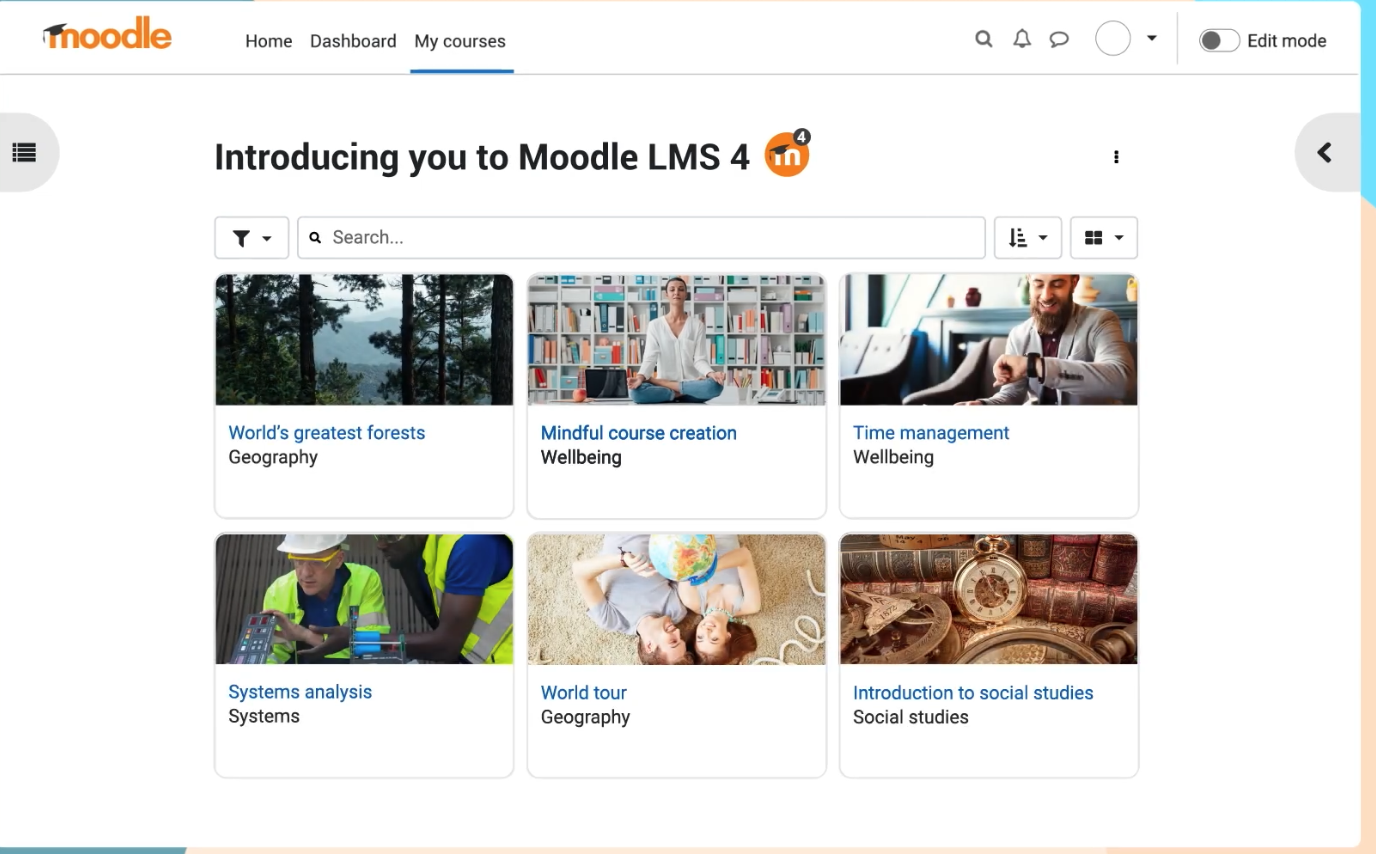
Moodle is an open-source LMS built around customization and flexibility.
Organizations can tailor the platform to their needs using over >2000 community-developed plugins, along with integrations covering forums, quizzes, assignments, badges, and video conferencing.
Support is available through active community forums and a global network of certified partners, though in-house technical resources are generally needed for deeper customization work. The mobile app supports both online and offline course access, which extends training to staff in locations with limited connectivity.
G2 rating: 4.1 / 5 (444 reviews)
Top Features
- Automated compliance and certification notifications
- 2,390+ open-source plugins for role-based training
- Multi-language support
- Online and offline mobile access
- Role-specific course authoring for F&B, housekeeping, and front desk
| What users like about Moodle | What users dislike about Moodle |
| “I like that you can build pretty much any course in Moodle. There are a lot of plugins and settings, so you can set it up the way you want. It works fine, nothing fancy, just does the job” – Gonzalo A., December 2025 “Moodle’s open-source architecture and plugin-friendly environment make for a platform that can be fully customized to fit your needs… provided that you have the programming skills to create the plugins that you need. There are many available community plugins that can expand the base features but should be installed with some trepidation as just as many have not been maintained or documented sufficiently.” – J N, September 2025 | “Sometimes Moodle feels slow or cluttered, especially when managing multiple courses. The new interface could be more visually modern and intuitive. Certain features require too many clicks, which can be time-consuming during busy teaching periods.” – Dr. Sheerali A., December 2025 |
3. Litmos
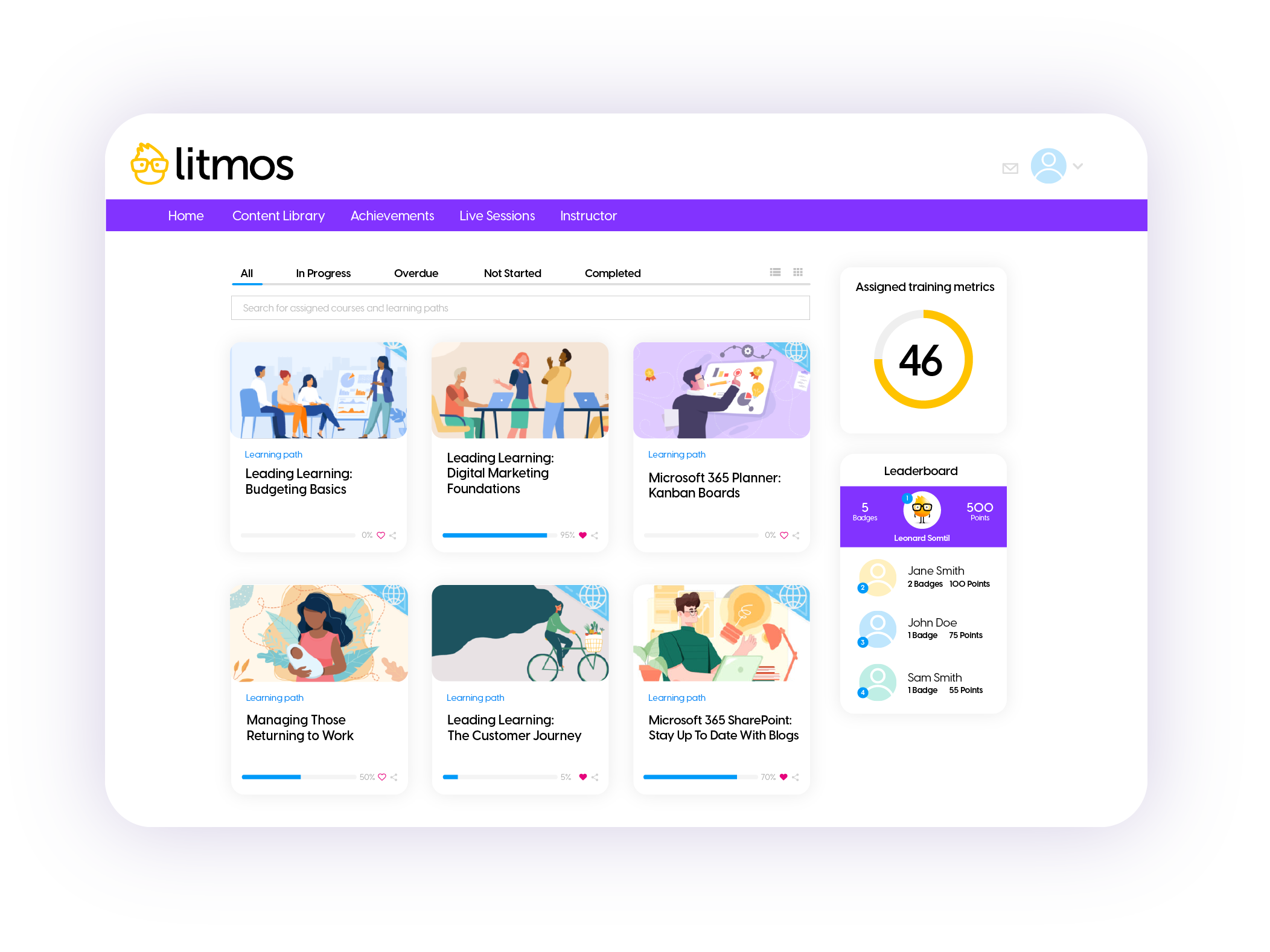
Litmos is a cloud-based LMS built for organizations training staff across multiple locations and roles.
For hospitality teams, it centralizes training for front desk, housekeeping, and F&B staff in one platform accessible on any device, including offline.
An AI assistant supports course recommendations and training assignments, while built-in compliance tools cover certification tracking and regulatory requirements across properties. Customizable learning paths, video assessments, gamification, and social learning features support consistent service standards without additional administrative overhead.
G2 rating: 4.3 / 5 (696 reviews)
Top Features
- Role-based learning paths for hospitality departments
- Built-in content authoring and off-the-shelf course catalog
- Compliance tracking with automated certification reminders
- Virtual and in-person instructor-led training
- Gamification, social learning, and AI-assisted course recommendations
| What users like about Litmos | What users dislike about Litmos |
| “I use the system every day to support learners and regional managers, continuously looking for ways to meet the organization’s training needs through this product.” – Bryant E., November 2024 “Litmos is a robust LMS that offers strong functionality paired with excellent customer support. It is well-suited for organisations aiming to confidently scale their learning programmes.” – Kira S., November 2025 | “I would say it’s pretty inflexible with reporting. They have a “reporting engine” but i say creating any custom report gives me a headache, and most of the time, after i download the report as a CSV, I have to spend time further revising the report in CSV format.” – Verified User in Security and Investigations, October 2025 |
4. Cypher Learning
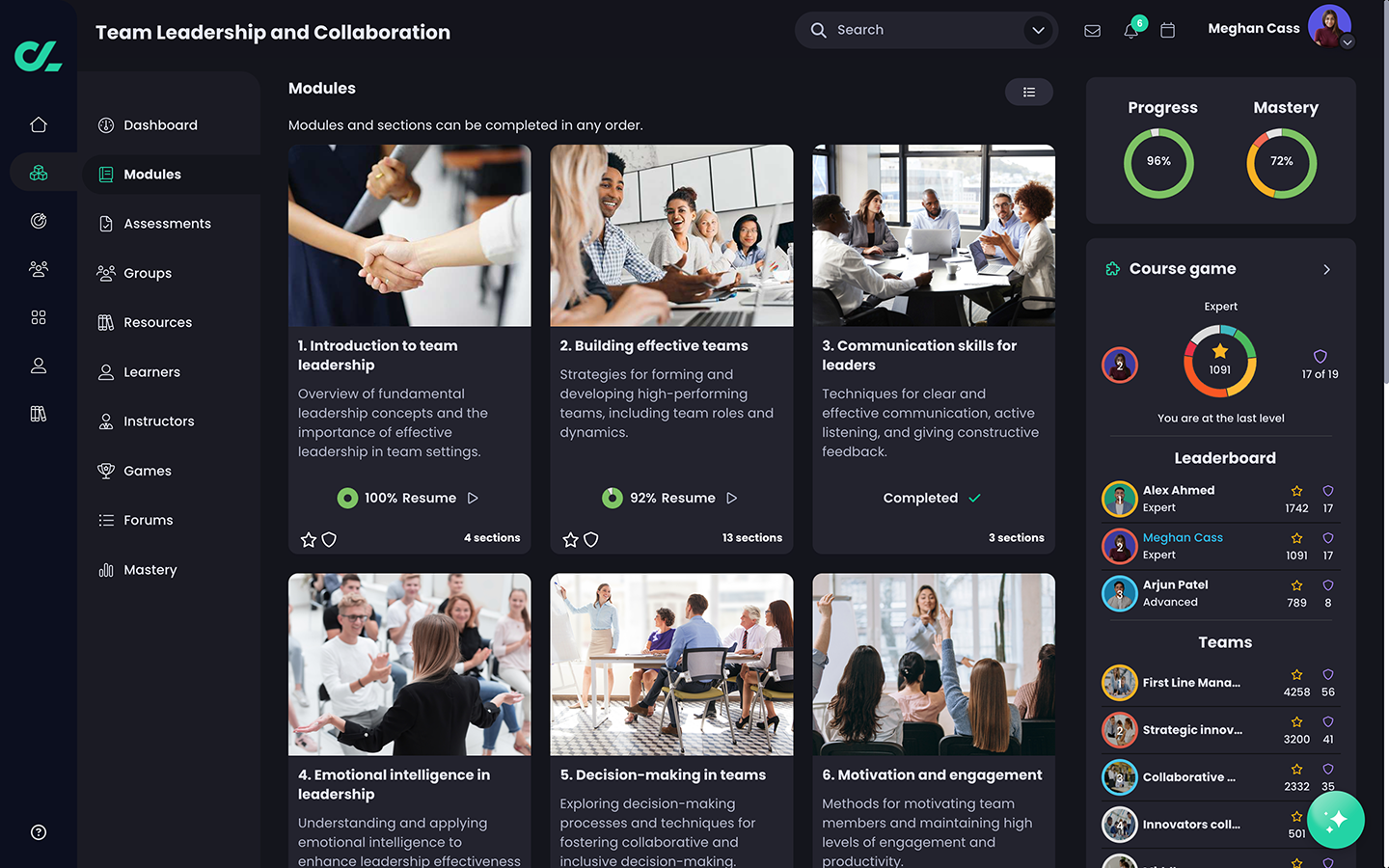
Cypher Learning is a cloud-based LMS with an embedded AI layer that supports course creation, skills gap detection, and adaptive learning paths.
The interface requires minimal technical knowledge, making it accessible to administrators and trainers without a development background.
For hospitality teams, the platform supports role-specific training across front desk, housekeeping, and F&B departments, with multilingual content delivery for diverse staff. Built-in gamification, compliance tracking, and eCommerce tools round out the platform for organizations managing both internal training and external course sales.
G2 rating: 4.4 / 5 (319 reviews)
Top features
- AI-powered learning paths with skills gap detection
- Gamification tools including badges, leaderboards, and points
- Compliance tracking and automated certification management
- Multilingual support for diverse frontline teams
- Built-in eCommerce for course sales and payment processing
| What users like about Cypher Learning | What users dislike about Cypher Learning |
| “I would like the platform to be a little more customizable” – Eduardo S. “Of all the different LMS platforms we compared, Cypher Learning was by far the best. Its UI is intuitive and easy for our student follow, while offering a host of options that allow us to best track our student’s progress.” – David D. “Not only is the functionality second to none, it is very easy to administer. In addition, the support received (both proactive and responsive) has been to a very high standard. The Cypher team is proactive in ensuring you get the most out of the platform, to suit your needs. This is a vendor who truly listens to their client’s needs. I feel like this is a true partnership.” – Crystal M. | “I don’t like that some advanced features require several additional clicks to find them.” – Fernando L. |
5. 360Learning
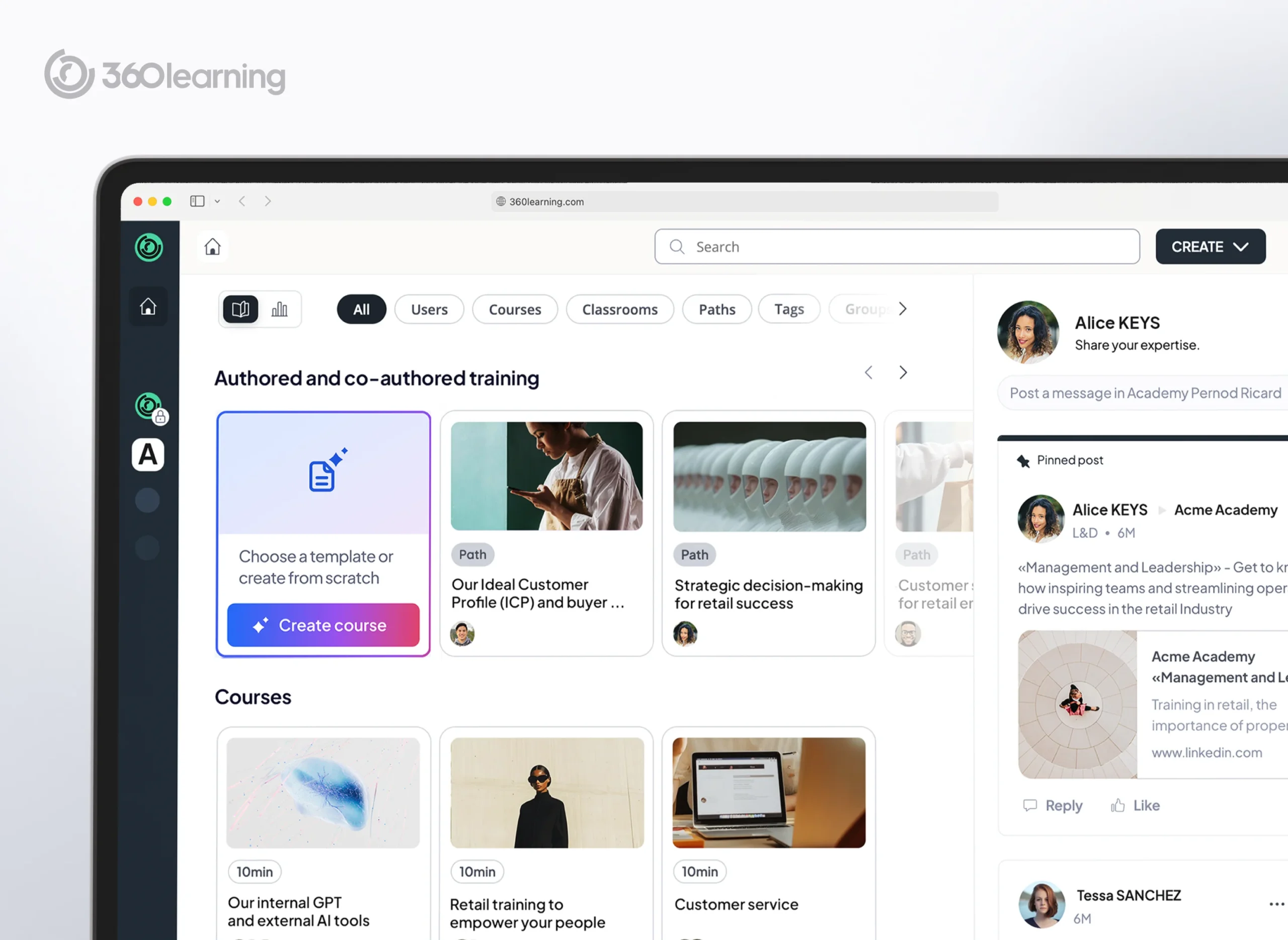
360Learning is a cloud-based LMS that places collaborative, peer-driven learning at the center of its platform.
For hospitality organizations, this approach supports knowledge-sharing across departments — allowing experienced staff such as bartenders, chefs, or senior front desk employees to convert practical expertise into reusable training content.
Role-specific onboarding paths can be tailored by job, location, and experience level, reducing time-to-floor for new hires. Automated certification tracking with expiry reminders supports compliance management across properties, while AI-assisted content creation and mobile access extend training to staff working across shifts and locations.
G2 rating: 4.6 / 5 (556 reviews)
Top Features
- Collaborative course creation for subject-matter experts and frontline staff
- Role and location-based onboarding paths
- Automated certification tracking with expiry reminders
- AI-assisted content authoring and personalized learning recommendations
- Mobile access with offline support for on-shift or on-property training
| What users like about 360Learning | What users dislike about 360Learning |
| “Easy management of the platform as an administrator. The numerous possible stats. Dedicated forums by platform and by training. Responsive technical support.” – Verified User in E-Learning, July 2025 “It’s very user-friendly and intuitive, which I find really helpful. The visuals are pleasant, and overall it’s a great experience to use.” – Nayeli M., February 2026 | “Some of the more advanced configuration options aren’t very easy to understand without investing extra time and getting additional support to learn them. Report and workflow customization could also be more flexible, and at times the system can be a bit slow to access, especially when you’re working with a large number of users and courses.” – Harris K., December 2025 |
6. Absorb LMS
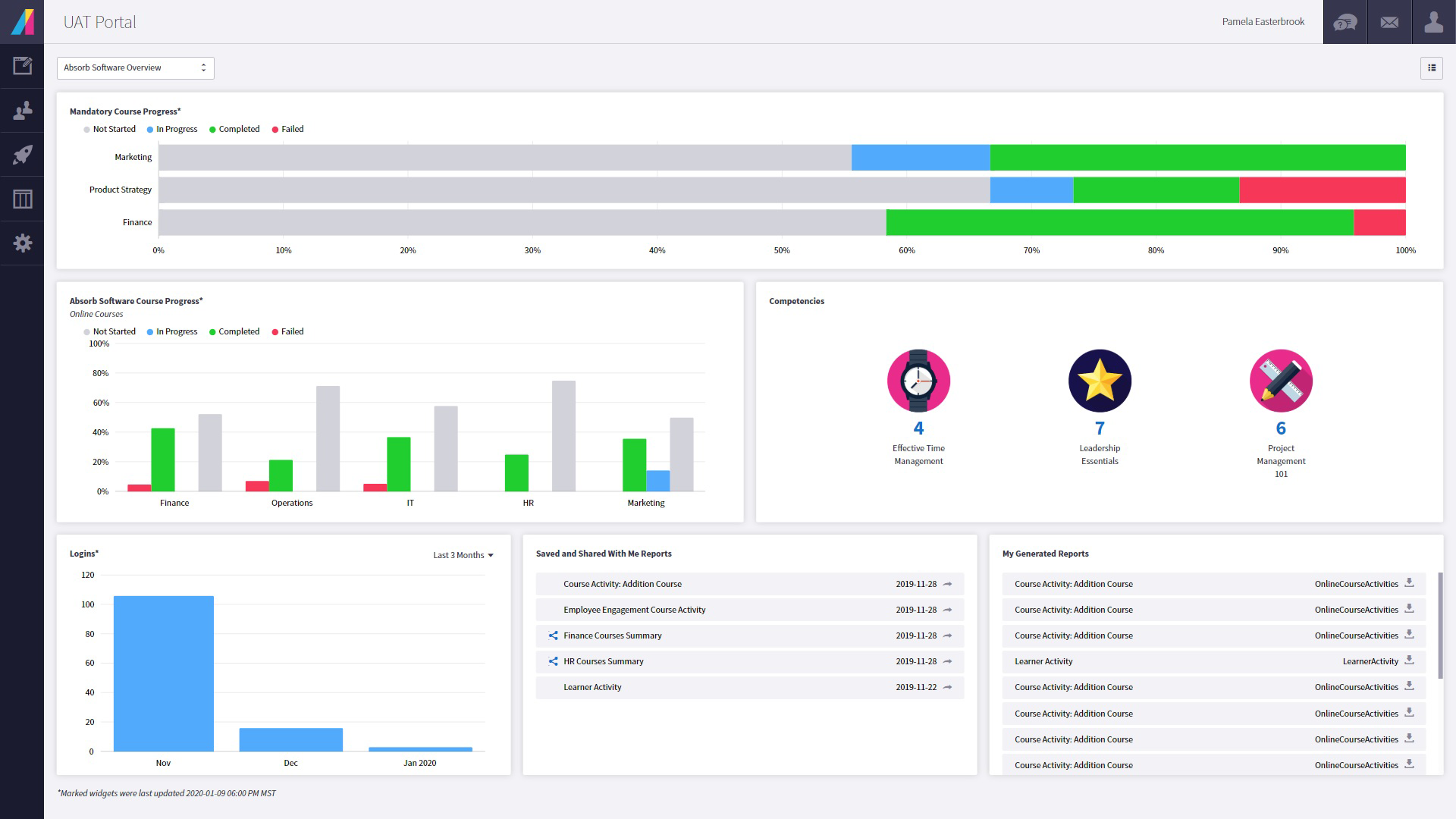
Absorb LMS is a cloud-based learning management system designed to support training across distributed teams and industries with varying compliance requirements.
For hospitality organizations, the platform offers tools to manage training for staff across multiple properties, including centralized course libraries that can be customized by location or brand.
The system includes built-in e-commerce functionality, allowing hotels or restaurant groups to monetize training content or offer certification programs to external partners. Learners can access training materials through mobile devices or offline mode, accommodating staff who work irregular shifts or in areas with limited connectivity. Reporting dashboards provide visibility into completion rates, certification status, and skill gaps across departments.
G2 rating: 4.7 / 5 (424 reviews)
Top Features
- Multi-tenant architecture for managing training across properties or brands
- Built-in e-commerce for selling courses or certifications externally
- Mobile app with offline learning support
- Customizable learning paths based on role, department, or location
- Advanced reporting and analytics with real-time dashboards
| What users like about Absorb LMS | What users dislike about Absorb LMS |
| “I find the support from the implementation process incredibly helpful” – Trey E., January 2026 “The dashboards and reports are clear and easy to understand, and we’ve also received excellent support from our Client Success Manager.” – Verified User in Hospital & Health Care, February 2026 | “The flexibility when it comes to the customization of admin and manager roles is quiet limited. ” – Verified User in Machinery, July 2025 |
7. TalentLMS
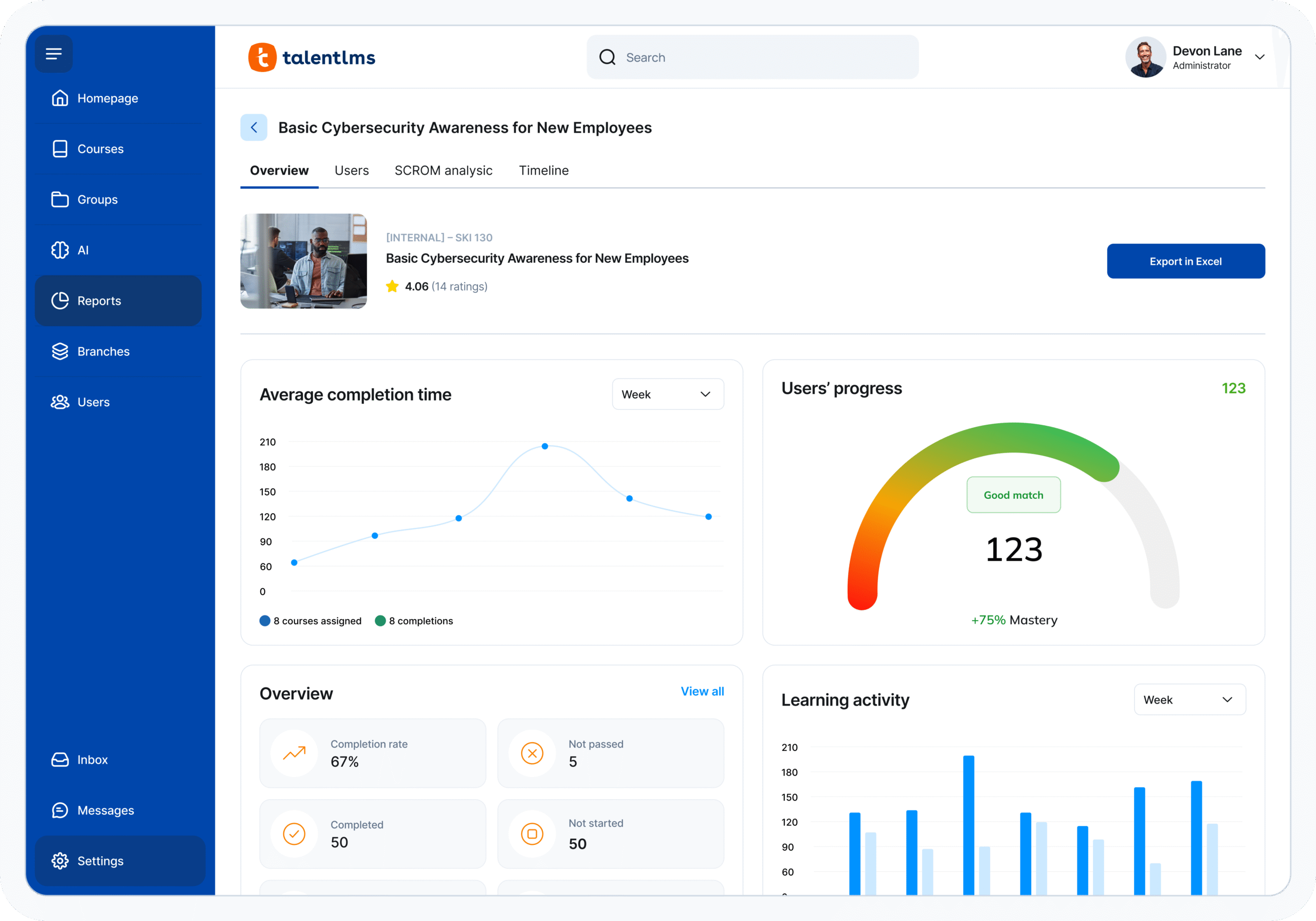
TalentLMS is a cloud-based learning platform built for ease of setup and use, offering hospitality businesses a way to deploy training programs without extensive technical configuration.
The system supports branch-based organization, allowing hotel chains or multi-location restaurant groups to assign content by property while maintaining central oversight.
Course creation tools include support for SCORM, video, and interactive content, with options to gamify learning through points, badges, and leaderboards. T
he platform integrates with video conferencing tools for live training sessions and includes mobile access for staff training during downtime or across shifts. Automated notifications and reminders help maintain completion rates for mandatory training.
G2 rating: 4.6 / 5 (793 reviews)
Top Features
- Branch-based training organization for multi-location management
- Gamification features including points, badges, and leaderboards
- Support for SCORM, xAPI, video, and custom content formats
- Live training integration with Zoom, Microsoft Teams, and other conferencing tools
- Mobile app with offline access for on-the-go learning
| What users like about TalentLMS | What users dislike about TalentLMS |
| I really appreciate how TalentLMS integrates AI, which makes it much easier to tailor the training to my specific needs.” – Valeria G., March 2025 “TalentCraft, which is the AI helper in content creation is really really nice. Not only for the content but to make your own content look nicer as it gives the ability to create a training webpage style instead of a blank page with only a video, do next, read, do next, etc. It’s more interactive.” – Sabrina P., November 2024 | “That some features are still not moved from the legacy version to the new version, like the progress tracking and access to tests and survey, which lead to our team having to move from 1 version to another all day based on what tasks we have to accomplish on it.” – Sabrina P., November 2024 |
8. Cornerstone Learning
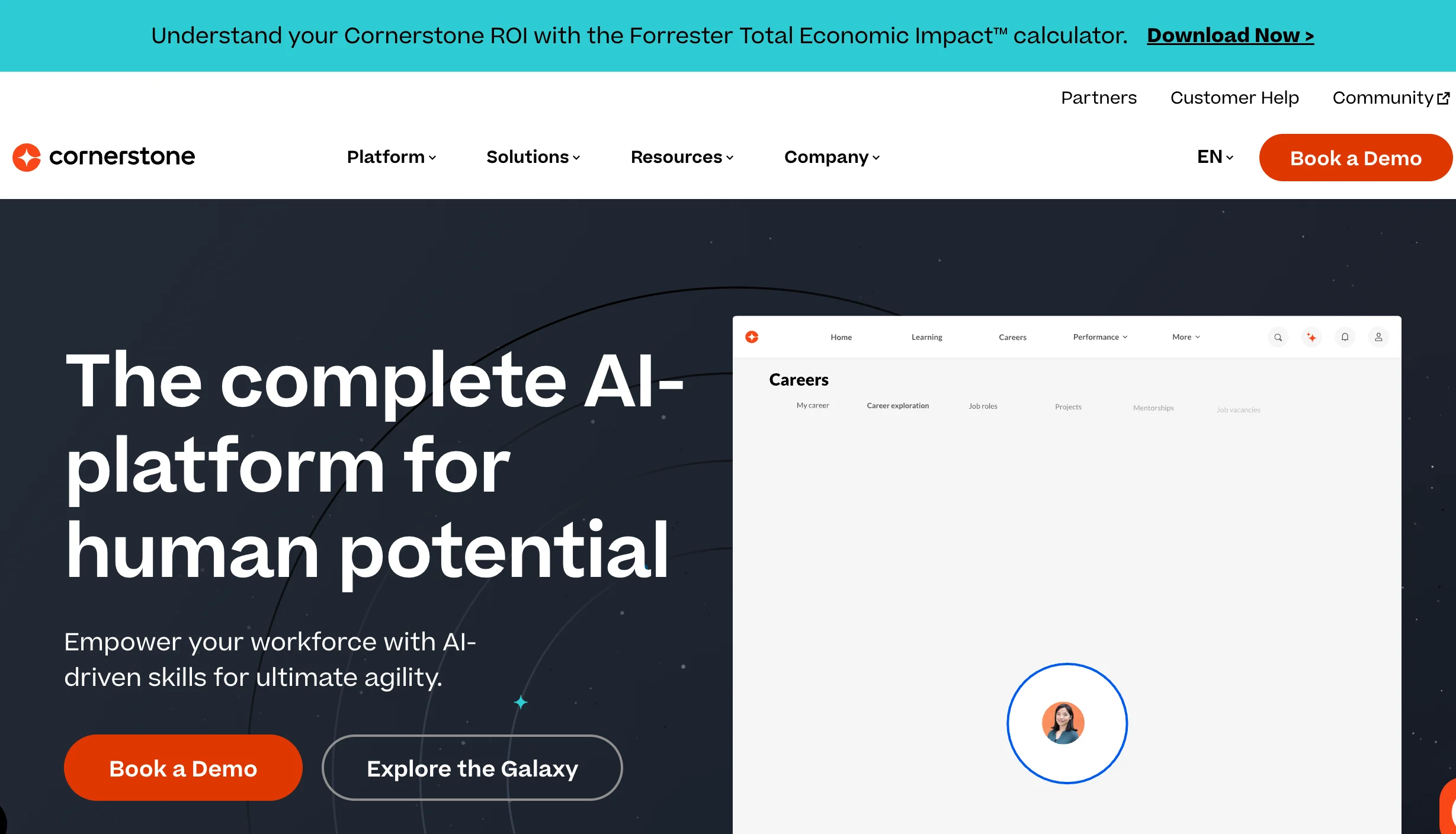
Cornerstone Learning is an enterprise-grade learning management system that forms part of Cornerstone’s broader talent management platform, combining learning delivery with performance tracking and workforce development tools.
For hospitality organizations operating across multiple properties, the system provides centralized training administration while supporting localized content delivery in multiple languages.
The platform includes a content marketplace with pre-built courses covering topics such as customer service, food safety, and workplace safety, which can be supplemented with custom organizational content.
AI-driven recommendations suggest learning paths based on employee role, identified skill gaps, and career development objectives. Compliance tracking features include automated certification management, expiry notifications, and audit trails that support regulatory requirements across different jurisdictions and property locations.
G2 rating: 4.1 / 5 (516 reviews)
Top Features
- Integrated talent management suite combining learning, performance, and succession planning
- AI-driven learning recommendations based on role and career development goals
- Pre-built content library covering hospitality and compliance topics
- Multi-language support for global hospitality brands
- Compliance tracking with automated reporting and audit trails
| What users like about Cornerstone Learning | What users dislike about Cornerstone Learning |
| “We can deliver so many offerings that meet our compliance needs and technical ones as well.” – Gary F. “They give employees the opportunity to find relevant learning in ways that make it easy. They give my training teams easy paths to get the right training in front of the right people.” – Verified user in mechanical or industrial engineering. “We can easily assign it to the desired audience and track the completions needed for audit requirements.” – Ryan B. | “Sometimes it feels like it can do so much, but not exactly what you need it to do.” – Cristi P. “I’m not too fond of the inability to bulk edit learning objects, learning assignments, etc.” – Verified user in human resources. |
9. ProProfs LMS
ProProfs LMS is a cloud-based learning platform designed for straightforward course creation and delivery, offering hospitality businesses tools to train staff without requiring instructional design expertise.
The system includes a library of pre-made courses covering topics such as customer service, food handling, and workplace safety, which can be used as-is or customized to reflect brand standards.
Virtual classroom functionality supports live training sessions, while assessments and quizzes provide immediate feedback on learner comprehension.
The platform tracks course completion, quiz scores, and certification status through centralized reporting, and integrates with tools like Salesforce, Zoom, and Slack. Mobile access allows staff to complete training on personal devices during breaks or between shifts.
G2 rating: 4.6 / 5 (42 reviews)
Top Features
- Pre-made course library covering hospitality and compliance training topics
- Virtual classroom functionality for live instructor-led sessions
- Quiz and assessment tools with instant feedback
- Centralized reporting for completion tracking and certification management
- Mobile-responsive design with access across devices
| What users like about ProProfs Training Maker | What users dislike about ProProfs Training Maker |
| “The simplicity. I don’t need a tech degree to create and manage training sessions.” – Joan B., April 2025 “I love the automation features, especially the ability to schedule courses and track completion. It makes training management much easier.” – Adrian D., March 2025 | “The user interface, while intuitive, can feel slightly dated in some places. A more modern visual refresh would elevate the user experience even further. Also the help articles could go deeper into use cases for advanced features.” – Wayne G., April 2025 |
10. EducateMe LMS
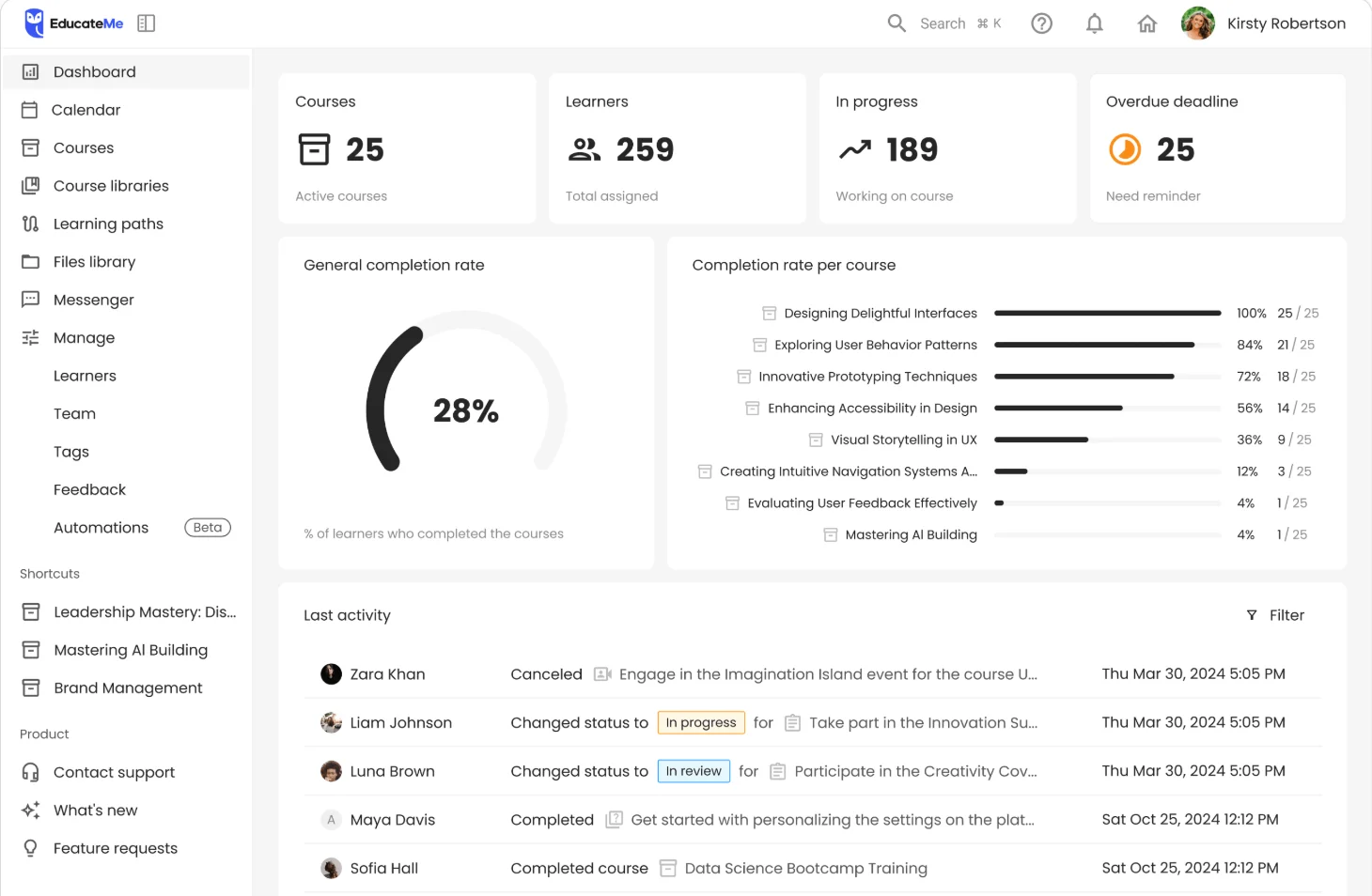
EducateMe LMS is a cloud-based learning platform that combines course delivery with content authoring tools, allowing hospitality organizations to create and manage training programs internally.
The system supports blended learning approaches, combining self-paced online modules with instructor-led sessions and on-the-job assessments. Training content can be organized by role, department, or property, with automated assignment rules that trigger specific courses based on job title or location.
The platform includes competency tracking features that map learning activities to skill development, providing visibility into staff readiness across operational areas. Mobile access enables training delivery to staff working across shifts, while offline capability supports learning in areas with limited connectivity.
Certification management tools track expiry dates and trigger renewal notifications automatically.
G2 rating: 4.7 / 5 (89 reviews)
Top Features
- Blended learning support combining online, instructor-led, and practical assessments
- Competency-based tracking linked to role requirements and skill development
- Automated course assignment based on job role, location, or department
- Mobile app with offline learning capability
- Certification management with automated expiry tracking and renewal reminders
| What users like about EducateMe | What users dislike about EducateMe |
| “We’ve been using EducateMe LMS for a while now, and it’s really elevated how we handle our online courses. The interface is straightforward and user-friendly—our team and learners picked it up quickly without any fuss The features perfectly match our business needs; managing courses and tracking student progress has become much simpler and efficient. Whenever we’ve had questions, their support team has been quick, friendly, and helpful” – Aleksandr B., June 2025 “The ability to combine video modules with live Q&A and interactive quizzes has broadened partner engagement for everyone. Real-time reporting and alerts allow us to stop measuring and chasing completions of tasks manually.” – Denys S., June 2025 | “I wish the content editor was a little more flexible for branding. It’d be nice to have more creative control over layouts.” – Olha B., August 2025 |
Benefits of Using a Hospitality LMS
Hospitality businesses have a lot to gain by introducing a professional LMS into their systems.
Among the many benefits of LMSs in the hospitality sector, we’ll talk about the most vital, which include the following:
Improved employee engagement
The best LMSs have the necessary functionalities to personalize learning paths, provide gamification features, and include social learning capabilities that work together to make online training more engaging and fun.
In fact, LMS features such as gamification, learning scenarios, and simulations can increase employee engagement by up to 92 percent.
Along with other LMS features, these functionalities can help create a learning-centric company culture by engaging team members better with their online courses and training modules.
According to Deloitte, companies with a strong learning culture have a retention rate of between 30 to 50 percent higher than their peers.
Easier performance evaluation
Many hospitality LMSs also come equipped with learner-performance tracking and management capabilities.
These allow organizations to keep an eye on new hires’ learning progress, identify skill and knowledge gaps, or provide opportunities for upskilling or reskilling employees.
Easier tracking and reporting
Another benefit of implementing a hospitality LMS into your organization’s tech stack is that it can break up isolated data silos and create a unified digital ecosystem.
You won’t just be able to track learner progress through the course material, but also get a bird’s-eye view across other company workflows that the LMS is integrated with.
These integrations can include anything from sales, marketing, HR, or customer service, among others.
In addition, customized LMS reports can provide in-depth and data-driven insights into your L&D processes and training materials for better decision-making and e-learning optimization.
Cost-cutting and time-saving
A well-implemented LMS can bring numerous financial benefits to a company’s training and L&D efforts.
First of all, organizations can automate and streamline many of their repetitive, tedious, and time-consuming e-learning and training tasks.
These allow HR teams, L&D professionals, and other stakeholders to focus more of their efforts and resources on other key areas of the organization.
Secondly, companies will no longer be as reliant on paper-based processes, saving them on office-supply costs.
As workflows become automated and integrated, the incidence of human error also drops, boosting both the employee and customer experience.
Lastly, LMSs can shorten the time-to-productivity of new employees, saving the company tons of resources on in-person training, as well as other onboarding and employee-turnover costs.
Key Features to Look For in a Hospitality LMS
Hospitality LMSs are geared toward providing numerous functionalities to organizations operating in the sector.
However, every LMS provider is different and may not have identical capabilities in mind when designing their e-learning offerings.
Features come in different shapes and sizes, but when it comes to the hospitality industry, you need to keep the following LMS requirements in mind:
Management of course curriculum
By definition, LMSs are digital tools used for the management of e-learning courses and training materials.
This includes the ability to create, curate, house, and distribute internal and external e-learning content in various formats to learners.
It’s important to mention that not all LMSs include comprehensive e-learning content-creation capabilities.
Those that do usually fall in the category of learning content-management systems (LCMS) but often lack robust delivery functionality.
Nevertheless, many professional LMSs integrate with third-party e-learning content-authoring tools to provide the best of both worlds.
Compliance oversight
Compliance-related LMS features are critical as they ensure employees are always up-to-date and informed about all health, safety, and other regulatory standards in their industry.
Such features include employee compliance–training tracking, automated course scheduling and notifications, and critical-knowledge checks like quizzes and assessments.
Performance analysis
The ability to track learner progress and perform regular skill assessments and performance evaluations allows trainers to ensure learners get the most out of their e-learning training modules.
These can also highlight potential issues or bottlenecks that may exist within the training courses, hindering the learning experience.
Multi-lingual support
The hospitality sector is known for working across country borders and often employing a diverse workforce.
Having the ability to design and deliver training in multiple languages is a must.
Many LMSs include localization and auto-translation features that make it easy for hospitality businesses to provide a consistent learning experience for all employees, regardless of location or language spoken.
Mobile friendly
Mobile learning, or m-learning for short, is as important in this day and age as all the other entries in this list.
Mobile-friendly LMSs greatly increase the flexibility and address the training needs of many learners, particularly those who need access to e-learning material while not at a desk or in the office.
We should also point out that today’s millennial and Gen-Z workforce are using their mobile devices for training purposes far more than desktop alternatives.
All that being said, let’s now turn our attention to the ten best hospitality LMSs on the market today.
How to Choose the Best Hospitality LMS
Well-trained teams are the cornerstone of every successful hospitality business. They need to know how to serve and work with clients and have the proper training in all aspects of the organization.
When choosing an LMS to address your hospitality requirements, you need to ensure that it’s up to the task and that it will scale with your organization.
You should also make sure that it provides good customer service whenever you need any help.
If Docebo is checking all your boxes, schedule a demo today and see how it can elevate your hospitality business.
FAQs about hospitality LMS
The six basic hospitality skills are communication, attention to detail, problem-solving, teamwork, time management, and customer service. These foundational competencies enable staff to deliver consistent guest experiences across all service touchpoints. Hospitality LMS platforms help develop these skills through structured training modules, interactive scenarios, and role-based assessments. For example, Docebo offers customer service content libraries, while 360Learning enables experienced staff to share practical techniques with new hires through collaborative course creation.
The 5 P’s of hospitality are Product, Price, Place, Promotion, and People. The “People” element—your staff—directly impacts guest satisfaction and service quality. An LMS strengthens this component by ensuring consistent training across all properties and shifts. Platforms like Docebo, TalentLMS, and Absorb LMS provide mobile access that enables staff to develop skills that enhance the guest experience and maintain service standards.
The best hospitality management software depends on your specific needs. For staff training and development, top LMS options include Docebo for multi-location operations with AI-powered content, Moodle for extensive customization, TalentLMS for ease of setup, and Cornerstone Learning for integrated talent management. Most hospitality organizations use multiple systems—a property management system (PMS) for operations, a CRM for guest relationships, and an LMS for staff development.
The 10-5-3 rule is a guest service protocol where staff acknowledge guests at specific distances: make eye contact at 10 feet, verbally greet at 5 feet, and engage in conversation at 3 feet. This creates a welcoming atmosphere without overwhelming guests. An LMS delivers this training through video demonstrations and interactive scenarios. Platforms like Docebo and Litmos offer microlearning modules that allow staff to review the protocol quickly, with mobile access ensuring consistent training across all shifts.
The 30/30/30/10 rule is a restaurant cost framework allocating 30% of revenue to food and beverage costs, 30% to labor, 30% to operating expenses, and 10% to profit. While an LMS doesn’t directly manage costs, effective training impacts this formula. Food safety training reduces waste, efficient onboarding decreases turnover and labor costs, and operational training improves productivity.